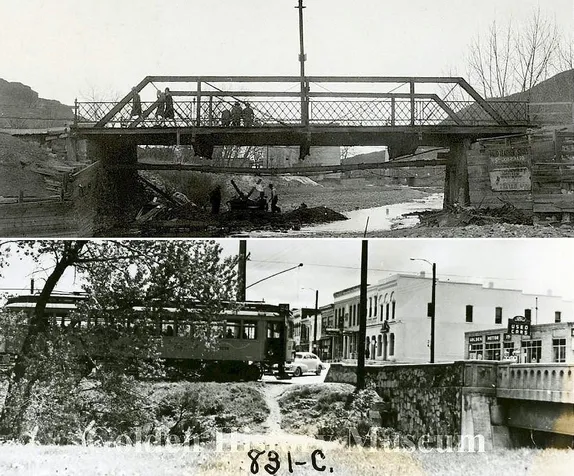
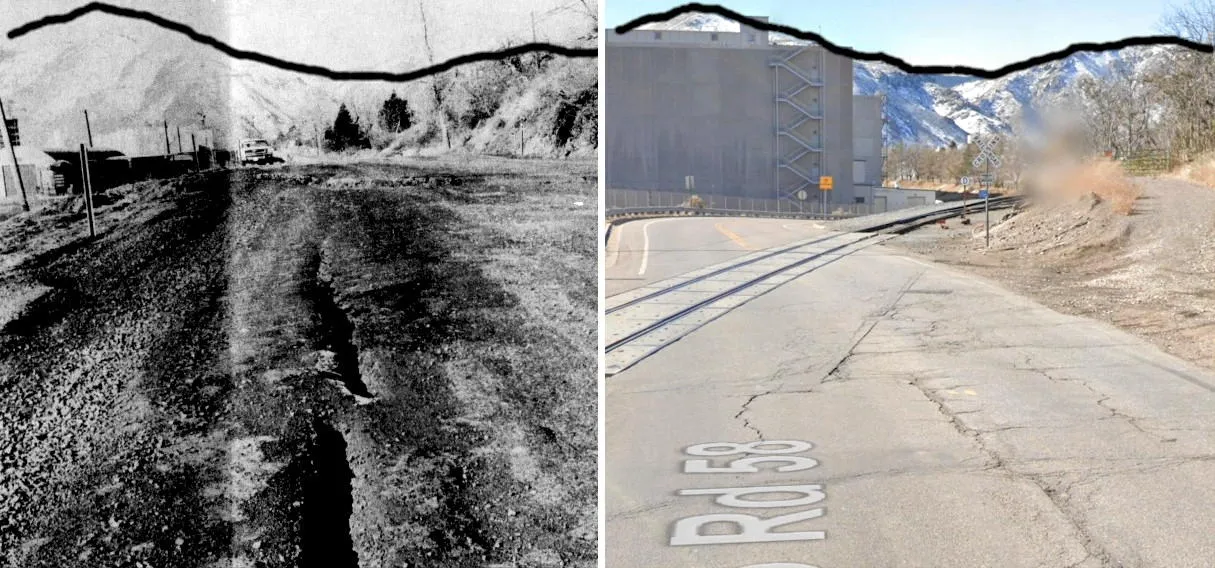
Yawning cracks in the pavement closed W. 44th Avenue just east of Golden Sunday and today. The section of road is designated as a state highway until the four-lane section of Colo. Highway 58 from Interstate 70 to Golden is completed in about a month. The section of roadway has been a trial for county and state road departments for years. The road lies on unstable ground—the bottom edge of North Table Mountain—and constantly trys to slip downhill onto railroad and Adolph Coors Company property.
Golden Transcript - March 26, 1973
53 Years Ago
Highway 58 was under construction in the spring of 1973. Until that route opened, traffic in and out of Golden still relied on 44th Avenue (called "10th Street" in Golden) and 32nd Avenue (called "13th Street" in Golden).
As the photos above show, that piece of roadway has always been difficult to maintain. The street crews do better with it now, but it's a constant struggle.
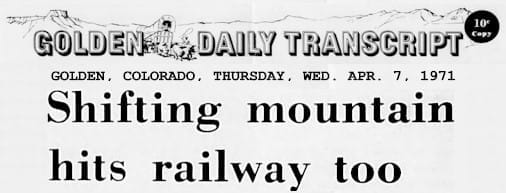
55 Years Ago
A similar situation was happening in 1971, when the Transcript reported that the shifting mountain was affecting the Highway 58 construction site, 44th Avenue, and the railroad. “You should have been here this morning,” said the foreman of the railroad crew. “The tracks looked like a roller coaster. The gravel had dropped ten inches here since yesterday.”
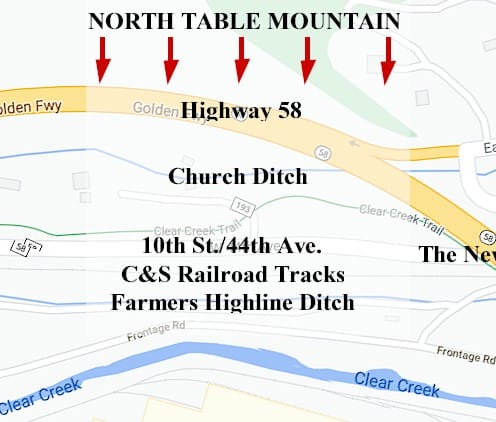
That year, the State (Hwy 58), the County (44th Avenue), and the railroad each agreed to pay up to $45K to install a new drainage system that would run under all three roadways.
122 Years Ago
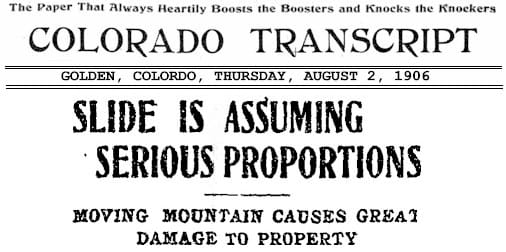
The August 2, 1906 Transcript featured an article that opens as follows:
Big Force of Men Employed to Keep the Railroad From Sliding into Clear Creek.
The famous slide of North Table Mountain, which for years has caused Jefferson county and the Colorado & Southern railroad a great amount of trouble, is now assuming proportions of a most serious nature.
The article went on to say that the railroad tracks had recently been pushed so close to the creek that it was too dangerous to take trains over them.
They consulted renowned railroad engineer Edward Berthoud, who said the situation was “peculiar and appalling.”