108 Years Ago
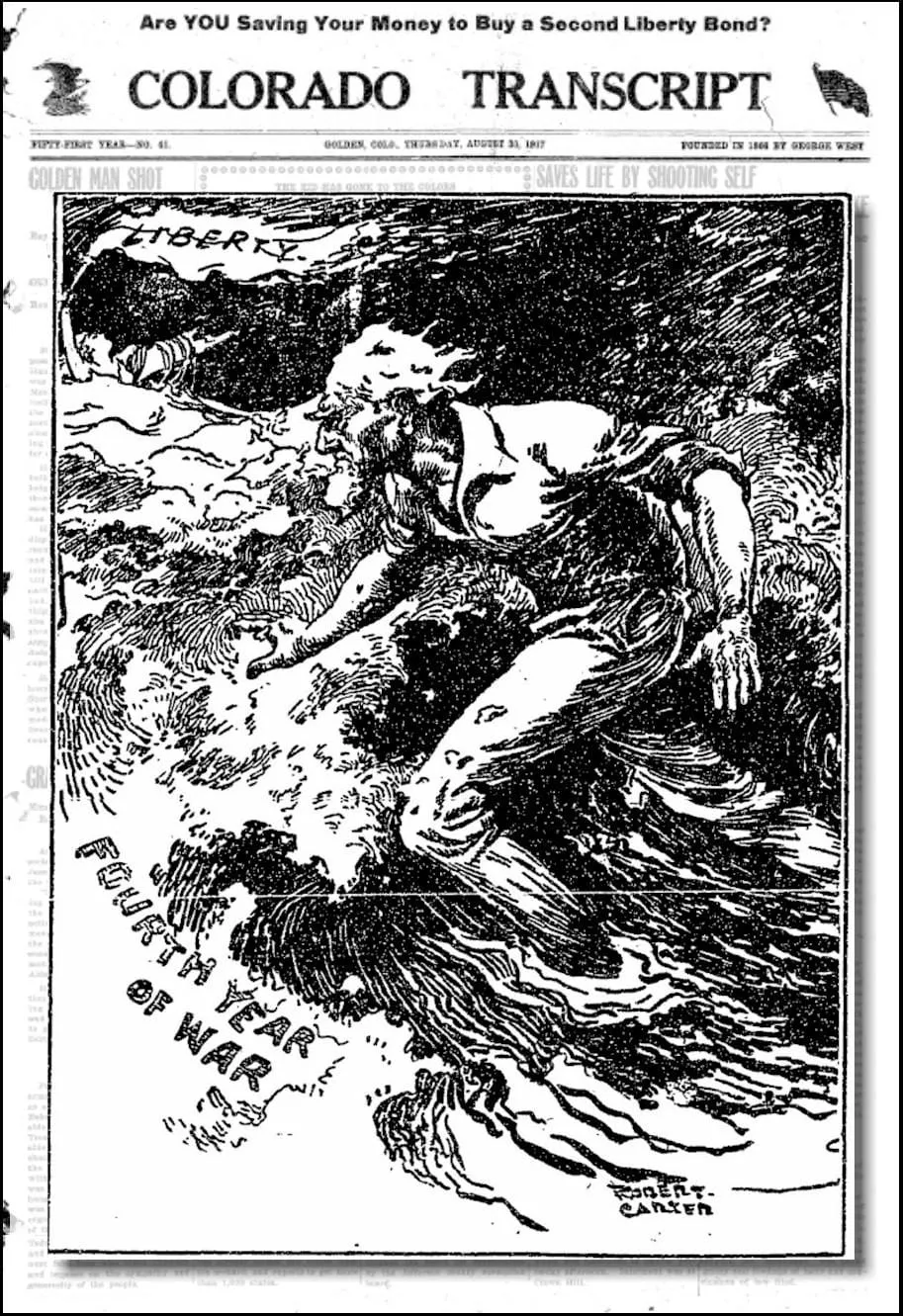
The summer of 1917 was a uniquely dangerous time in Golden. World War I had been raging in Europe since August of 1914. The United States had entered the war in April of 1917. By August, Golden readers were accustomed to watching the paper to learn which of the young people were heading to war.
Heading to War
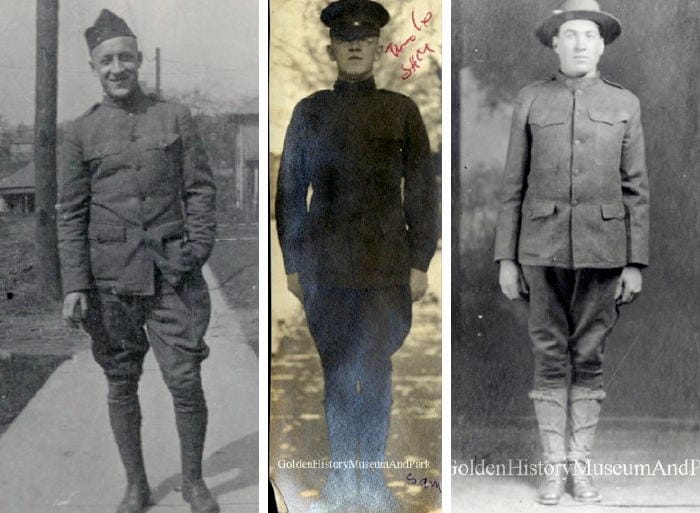
The August 30, 1917 Colorado Transcript informed readers that Frank Brunel had been drafted. Walter Johnson had been called in for his draft physical and awaited further word. A. R. Williams was applying for a commission in the signal corps. Harry Ostrader and Charles Hemberger had been accepted to officer training and had left for Fort Sheridan in Illinois. Lieutenant Alvah Moody had enjoyed a brief visit home to see his parents in Golden, but was on his way back to duty in Bedford, Massachusetts.
No doubt, the community worried about the fate of these young men, who would eventually be sent into battle in Europe. Feelings ran high against men who avoided the draft and were perceived to be SLACKERS.
Shot by a Slacker
The front page featured an article titled “Golden Man Shot By Italian Slacker.” A “former Golden young man,” Raymond Hauser, was working in one of the local clay pits and staying in a nearby boarding house. He and a fellow clayworker/boarder–an Italian, named Dominic Stross–argued over ownership of a certain pillowslip. Stross shot Hauser in the thigh with a forty-four revolver, then fled. The Sheriff had already been preparing to arrest Stross for evading the draft. After the shooting, he pursued him with greater determination. Unfortunately, Stross disappeared into the Italian community and the Sheriff was unable to find him.
Auto Hazards
Automobiles were still very new at that time. Roads were bad, drivers were unskilled, and every issue of the paper was filled with horrifying stories about car accidents.
One article reported that Miss Ruth Eberhard had been painfully injured when she and four other occupants of a Ford plunged over a high embankment in Golden Gate canyon. The car had struck a boulder and left the road, “which is very narrow.”
A family in Arvada were shaken when their car plunged over a steep embankment and did “a complete somersault.” The two parents were caught under the car. Their two children had been in the back seat. The son was thrown clear and helped his sister escape from the car. “Mrs. Greenspoon was pinned under the car, face downward and the weight of the car rested on her back.” Miraculously, none were seriously injured.
A woman from Fruitdale (now Wheat Ridge) was killed in an accident on Berthoud pass. Her husband lost control of the car, which struck a rock and was thrown over the edge into the abyss below. The other occupants of the car escaped unharmed. The article did not detail the lady’s injuries. She was survived by her husband, three daughters, and four sons.

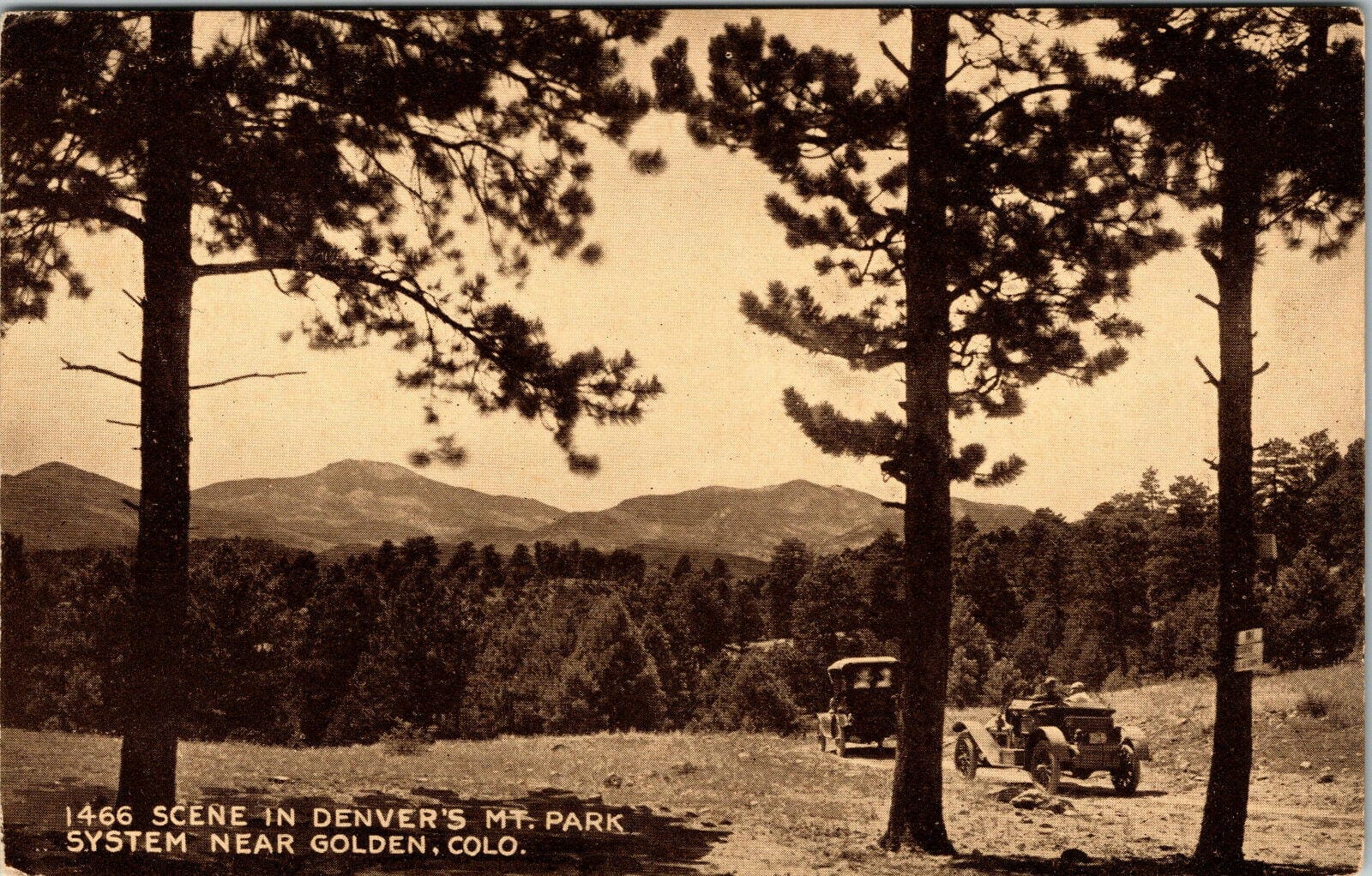
In the meantime, the Secretary of State was trying to slow the “joyriders” who were racing through the newly-created Denver Mountain Parks. No Highway Patrol had been established at that time, and local governments were still arguing about jurisdiction when a car passed from one city (or county) into the next. The Secretary of State was in charge of issuing drivers licenses, so he hired two “inspectors” to work in the Mountain Parks and empowered them to revoke speeders’ licenses.
Rattlesnakes and Bullets
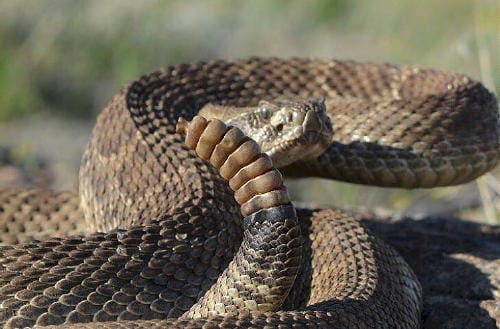
The August 30th, 1917 Transcript described the adventure of Orville O’Conor, who had been picking chokecherries in Clear Creek canyon when he was bitten in the calf by a rattlesnake.
O’Conor knew in a moment that the poison would immediately begin to flow through his system, and that, being so far from help, his life could not be saved unless he took drastic action. He knew that if he could cause a wound to bleed freely he had a chance of preventing the spreading of the poison. Not having a knife with him, he placed his revolver against the place where he was bitten and sent a bullet through the fleshy part of his leg. He then tied a tourniquet around the leg above the wound and started for the railroad track.
He found a gang of railroad workers, who put him on a handcar and rushed him to Golden. There, a doctor treated him and said that the young man had “undoubtedly saved his life by his prompt and nervy action.”
This approach is no longer considered the optimal treatment for rattlesnake bites.