62 Years Ago
The October 31, 1963 Colorado Transcript included an editorial expressing approval for the practice of trick-or-treating. The editors felt that it was a good alternative to the recurring vandalism of earlier Halloweens.
Time was, not too many years ago, when soaped windows and spilled garbage cans were as inevitable as the dawn of the morning following Halloween. Dad would most likely have to get the ladder out and bring the fence gate down from the roof of the house and the little “buildings” [outhouses] had to be set upright before normal family routines could be resumed. There was also a great deal of vandalism, probably far more than today.
About 25 years ago things began to change. Kids were stopped from a window-soaping job by the offer of a kindly housewife to exchange some cookies or candy in exchange for the youngster’ promise to lay off the soap.
As the years passed this nice custom developed into quite a thing. Kids didn’t even take soap along with them any longer–they were too busy collecting goodies in pillow cases, shopping bags or anything else for all the booty they collected while making the rounds. “Tricks or Treats” was the option, and most households paid off.
Colorado Transcript – October 31, 1963
A review of earlier Transcripts provides plenty of evidence of the referenced mischief:
1915 – 4 persons injured in a Halloween “auto party”
1926 – a reward offered for the return of an iron gate taken on Halloween
1927 – soaped windows and “roughness” on the part of larger boys
1929 – playground equipment destroyed, windows soaped
1933 – pranksters’ fires menace property
Perhaps the men who have boasted to their sons of their youthful Hallowe’en pranks now regret it.
Colorado Transcript – October 31, 1929
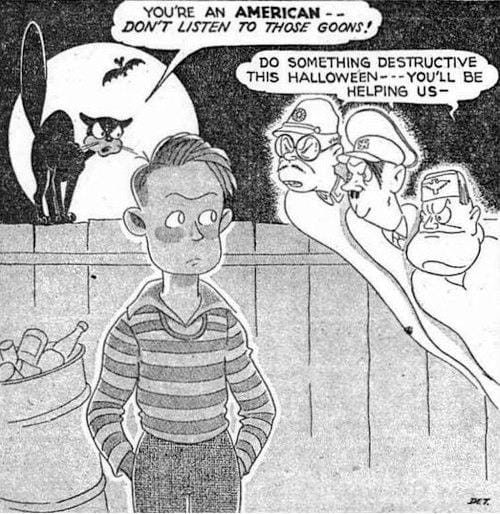
In 1942, there was a national campaign, asking students to put a stop to Halloween vandalism as a gesture to helping with the war effort. It seems to have been successful in Golden–the Chamber wrote letters to the schools afterwards, thanking the students for the “patriotic” Halloween.
The anti-vandalism efforts continued after the War. In 1958, the Jefferson County Student Council promoted a “Be The Best, Not The Worst on October 31st” campaign.
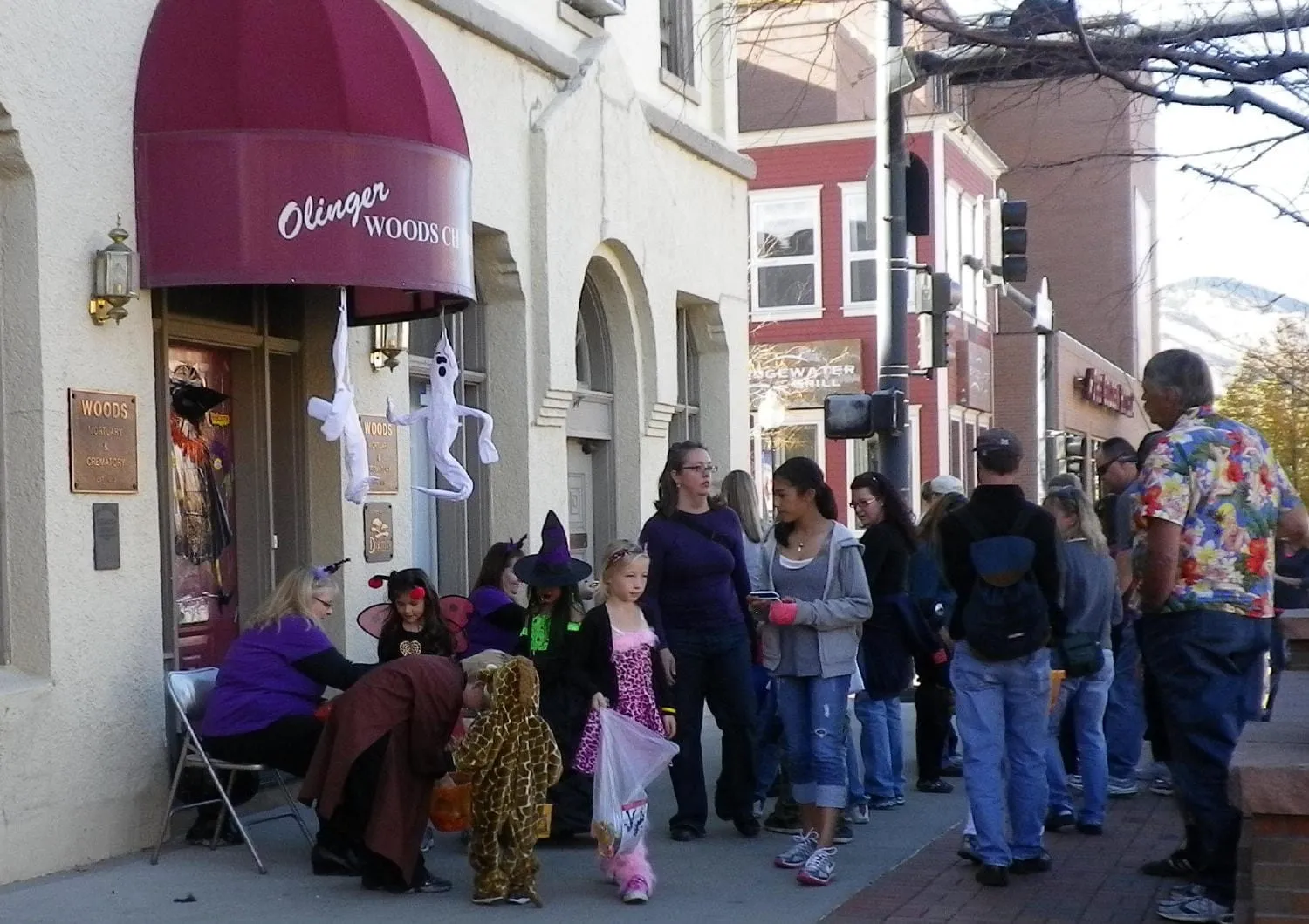
With the onset of the Baby Boom, adults began to take charge of Halloween. Instead of letting kids run around town, pranking and vandalizing, parents and civic organizations gave big parties, with lots of candy. Door-to-door trick or treating became standard practice. The downtown Halloween extravaganza began in the early 1970s.