83 Years Ago
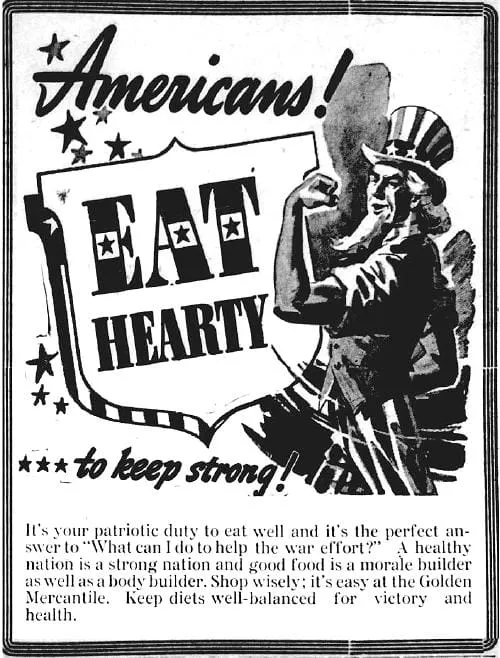
The July 30, 1942 Colorado Transcript, written during World War II, was all about food production, rationing, and war bonds.
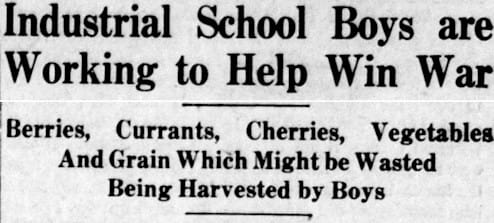
With so many young men serving overseas and so many women working in wartime industries, it was hard to find workers to pick crops. Many of the boys from the Industrial School worked for area farmers harvesting cherries, raspberries, currants, wheat, potatoes, corn, and onions. They were paid for their work. It was considered vocational training, since the school administrators thought it likely that the boys would need gardening, farming, or ranching skills as adults.
Many commodities were rationed during the War, and the paper included articles about rubber collection drives and sugar rationing. An editorial titled “THIS IS WHY!” explained the following:
There is enough steel used in making one auto to make 26 heavy machine guns, seven auto tires make one bomber tire; more metal, more man-hours, and more machine hours go into one typewriter than into one Garaud rifle; cuffs on 21 men’s suits use as much wool as an average soldier’s uniform; a pound of sugar is equivalent to the alcohol required to shoot 47 Japs.
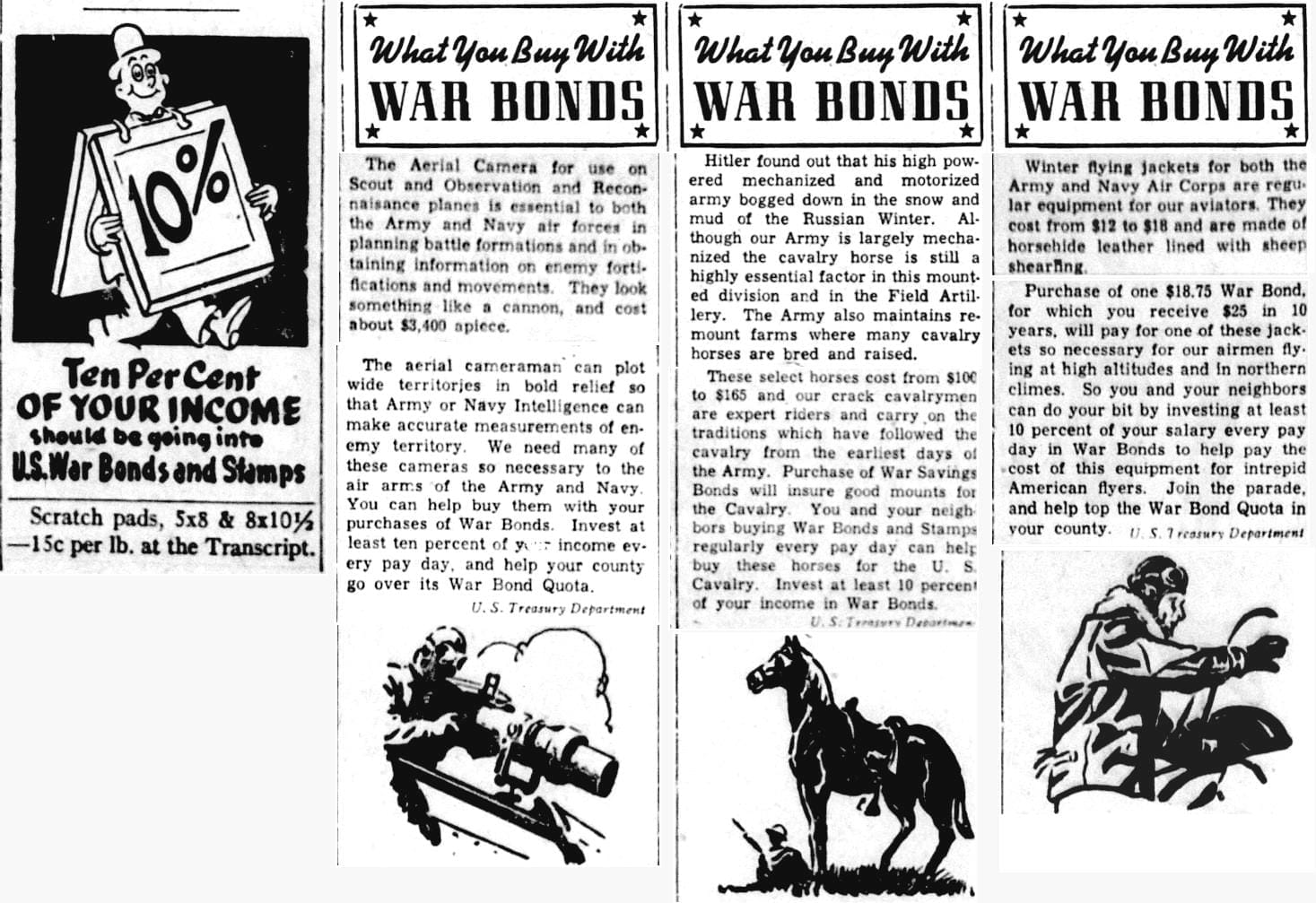
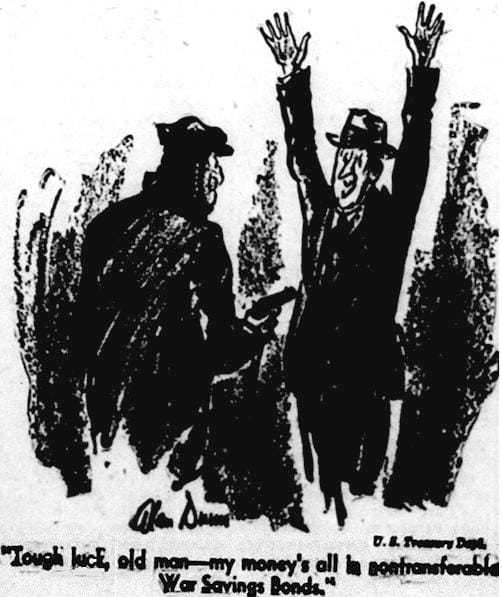
War bonds were a recurring theme throughout the paper, with three separate pieces focused on “What You Buy With WAR BONDS,” and a cartoon reminding readers that 10% of their income should go into war bonds.
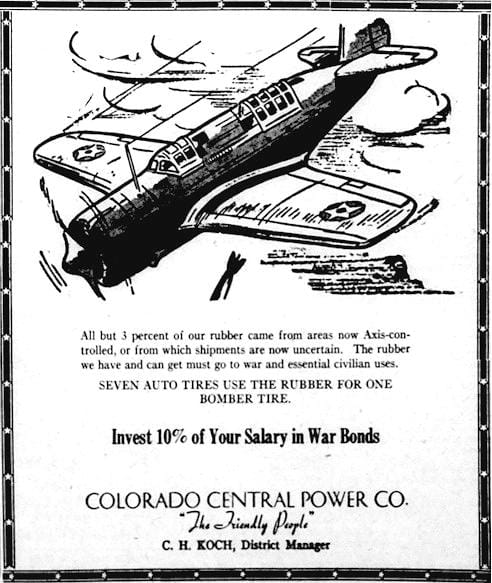
The Colorado Central Power advertisement covered both rationing and war bonds, explaining that “all but 3% of our rubber came from areas now Axis-controlled,” and reminding people to save 10% of their salary in war bonds.