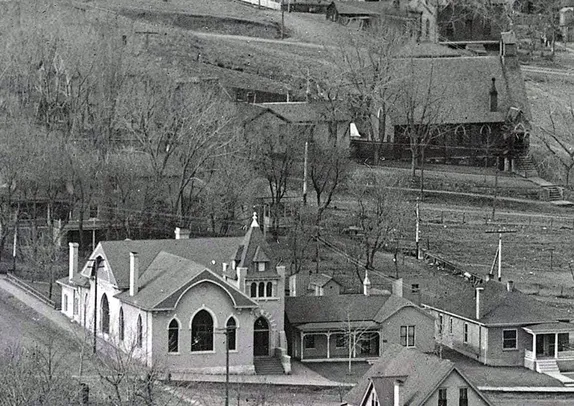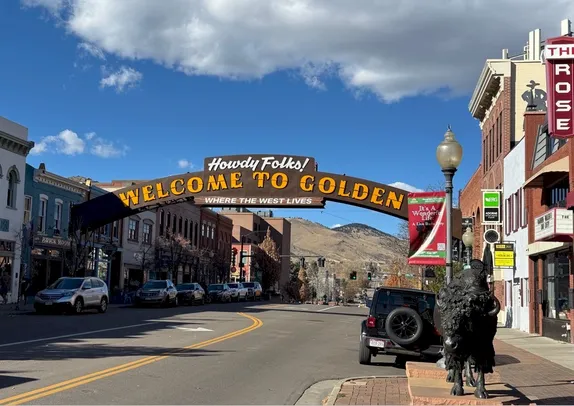
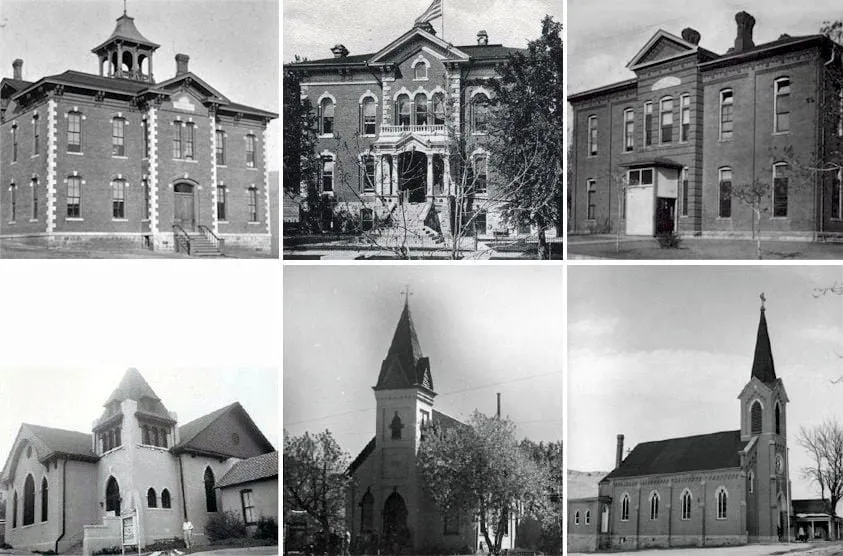
In the decades after World War II, Golden was on a “modernization” binge. Many of our Victorian-era buildings were razed and replaced at this time. Historic architecture wasn’t valued in that period, but modern conveniences such as central heating and plumbing were. The need for parking lots drove many of the demolitions. People were moving farther from downtown, and they were less likely to walk to businesses, so they needed somewhere to park.
The Astor House was slated for demolition in the early 1970s. The space it occupied would have provided 8 new parking spaces.
In response to that plan, a group of citizens founded the Golden Landmarks Association. They persuaded City Council to give them some time to prove the value of the building. Volunteers peeled wallpaper, painted, made repairs, and shored up the foundation. They organized community events in the building and persuaded Golden’s voters of the value of preserving one of our oldest buildings. In the end, Council agreed to bring it to a vote, and Golden’s citizens voted to purchase and preserve the building.
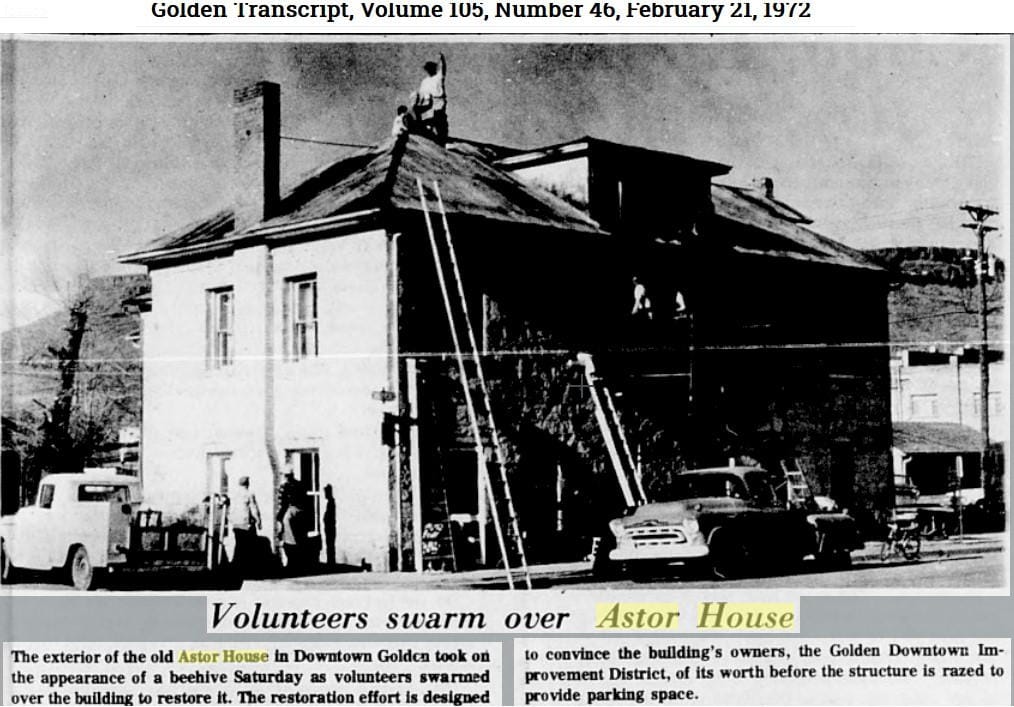
The Golden Landmarks Association ran the Astor House as a museum for about 40 years. Many old Golden families donated antiques to furnish the bedrooms, dining room, and kitchen.
Golden Landmarks was also entrusted with the Richard Ronzio and Pete Morrison photo collections as well as other valuable Golden History documentation. They helped establish Golden’s 12th Street, 8th and 9th Street, and East Street historic districts, and did significant restoration work on the brickyard house.
In recent years, they have celebrated Golden’s Living Landmarks with an annual banquet toasting people and institutions who have made contributions to Golden’s history.
To learn more about Golden Landmarks Association, review the year-by-year history by Historian Richard Gardner on the GLA homepage.