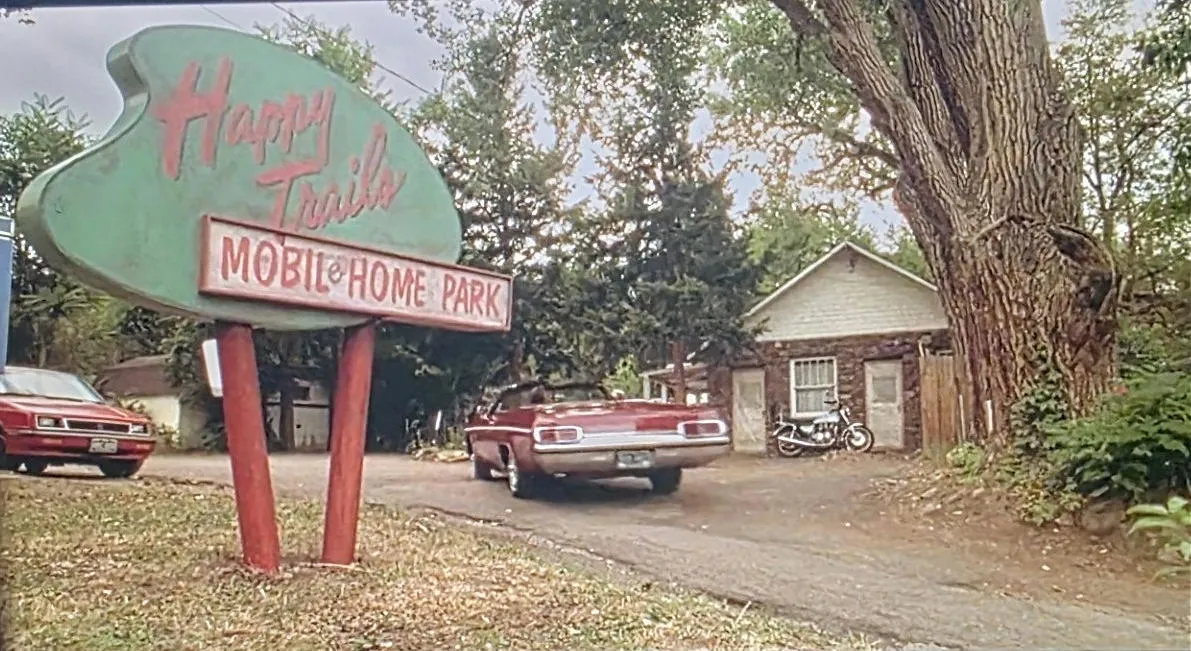
Last night, I saw a snippet of the movie Things to Do in Denver When You're Dead. I've never seen the whole thing, but now I have it on hold at the library. The attraction? It included a scene shot at the Big Tree Mobile Home Park. You may not remember that--it's been gone for years. It was located on Jackson Street, between 22rd and 23rd. It included a mix of stone cottages and mobile home spaces, all overhung by huge cottonwood trees. Here's the story of the place:
W.J. Sapp was engaged in several enterprises in early Golden. He ran a stable in 1879, managed the Bone Fertilizer plant beginning in 1882, and leased the bar and billiard rooms in “the new hotel” (probably the St. Bernard Hotel at 12th and Jackson) in 1884. He and his family sold their home at Ford and 3rd (now 13th) Streets in 1885. It may be at this time that he purchased the heavily-wooded property at 22nd and Jackson. His wife died of consumption in 1886, leaving him with four young children.
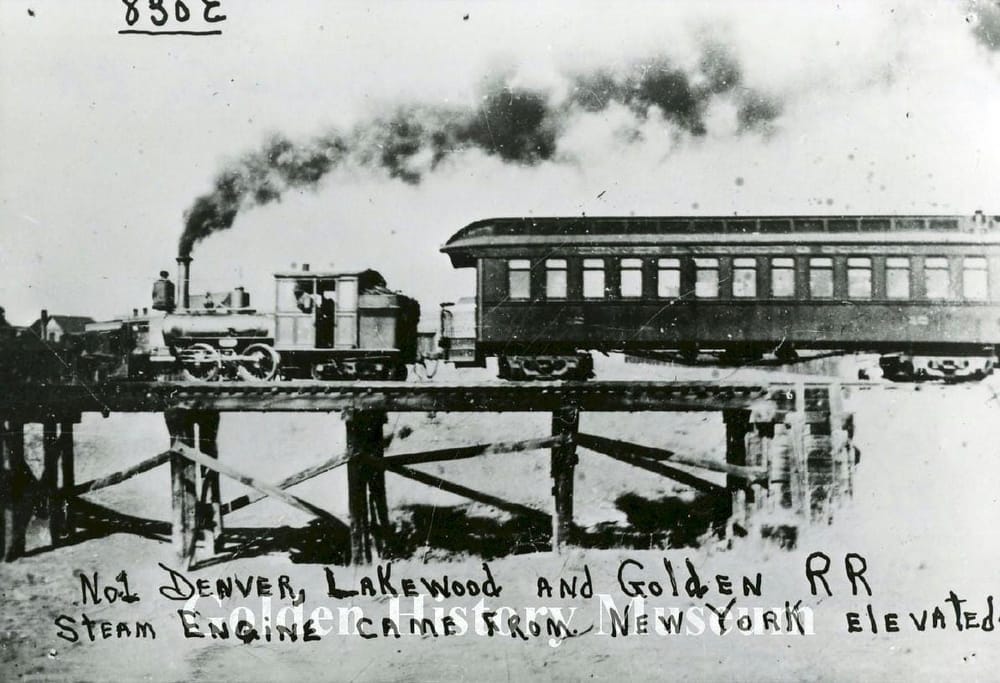
In 1893, the Denver Lakewood and Golden Railroad, which ran quite close to the property, leased the Sapp residence and grounds to turn it into a tourist attraction, with a dancefloor and refreshments.
Through the enterprise of the management of the Denver, Lakewood and Golden railroad Golden has at last a place of rational amusement for visitors and citizens. Sapp’s Grove, a beautiful spot at the eastern edge of the city, has been leased by the railroad company and fitted up in fine style for dancing, picnics, etc., and it will doubtless be the means of largely increasing their passenger receipts. A fine open pavilion has been erected with an elegant dancing floor, seats have been placed about the grounds, the whole brilliantly lighted by electricity. Mr. Sam. Cunningham, our popular caterer, has tents erected for dispensing ice cream, soda water and other cooling temperance drinks, fruits, confectionery, cigars, etc., leaving nothing to be wished for by those who desire to have the new resort run in a quiet, pleasant manner. The new resort was successfully inaugurated Saturday evening last, when a large number from Denver came in on the several trains. Nearly all the young people of Golden were there, and dancing was indulged in to a late hour. The special rates on the road continued through Sunday and all trains from Denver were well filled by Denver’s fun-loving people, who spent the day at the grove and in town in a pleasant and rational manner. Sapp’s grove pleasure grounds are a pronounced success from the start.
Colorado Transcript - June 21, 1893
The following January, the Sapp residence and barn burned. The family were away from home and only the horse and harness were saved. That spring, the railroad elected to move its pleasure pavilion closer to downtown (approximately 12th and East Street, now inside the Coors property).
The Sapp property remained available for rent as a picnic grounds. A 1902 article described a Labor Day picnic where “the grove was beautifully illuminated by electric lamps.”
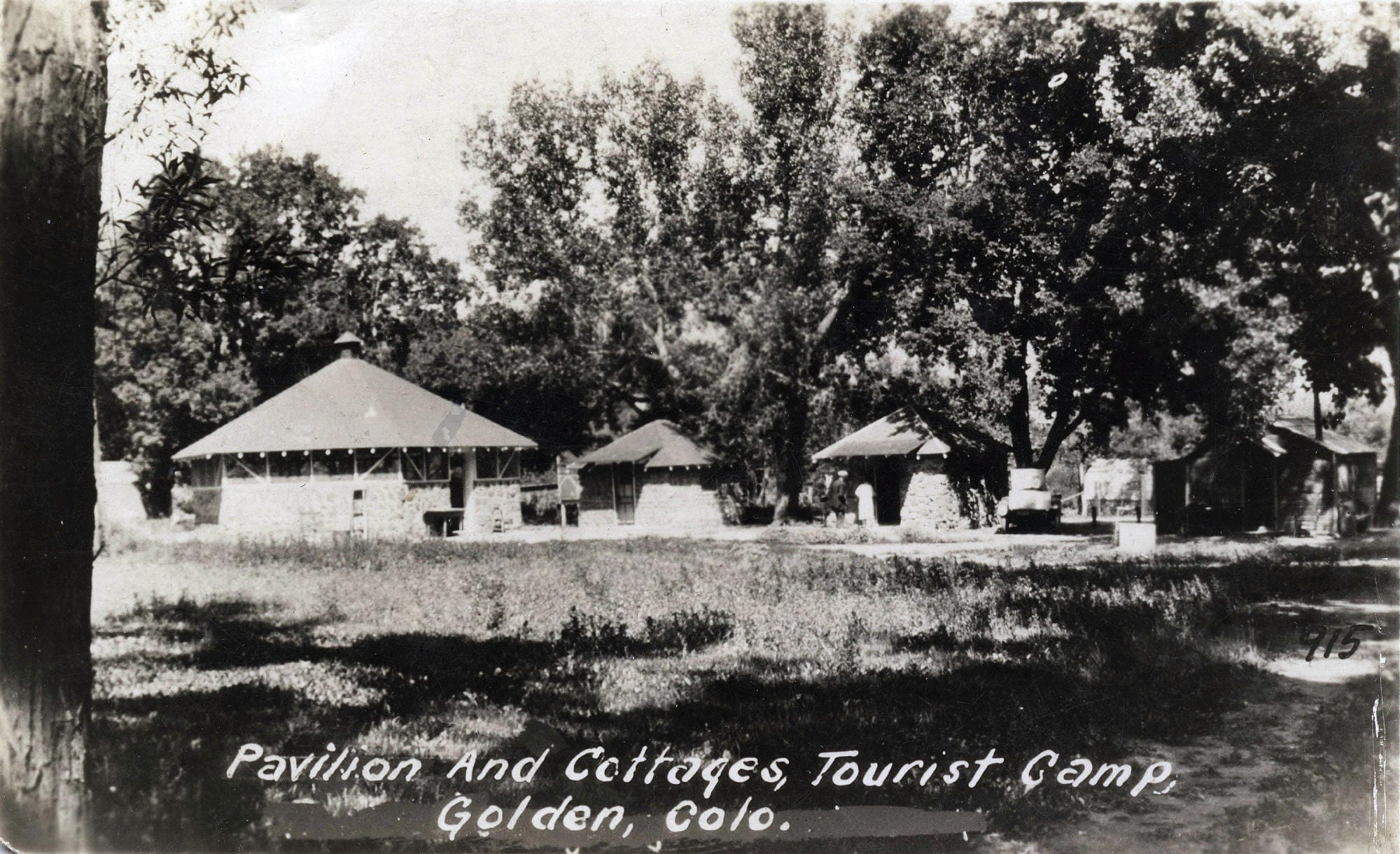
Mr. Sapp died in 1909. In 1921, the Chamber of Commerce began urging the city to provide a camping ground for the growing number of auto-tourists. They suggested that the city lease “the old Sapp’s grove property.” The City bought the property in 1924. Stone guest cabins were added, in addition to the spots set up for tents. The Transcript ran many articles through the years, describing Golden’s tourist camp as one of the best, cleanest, and friendliest in the country.
In 1939 (during the Great Depression), the City decided to sell the Tourist Park. Council cited the $100/year needed to operate the place and their desire to get the property off city books and onto the tax rolls. Voters approved the sale by a vote of 400 to 46. The park was sold into private hands.
A family named Loveland bought the park in 1956. Mobile homes became quite popular in the years after World War II as a form of affordable housing, and the Lovelands added thirteen additional trailer spaces. A 1958 birth announcement mentioned that the father was a teacher at Golden High School and lived in the “tourist park.” The Lovelands sold the park to the Brouillet family in 1959.
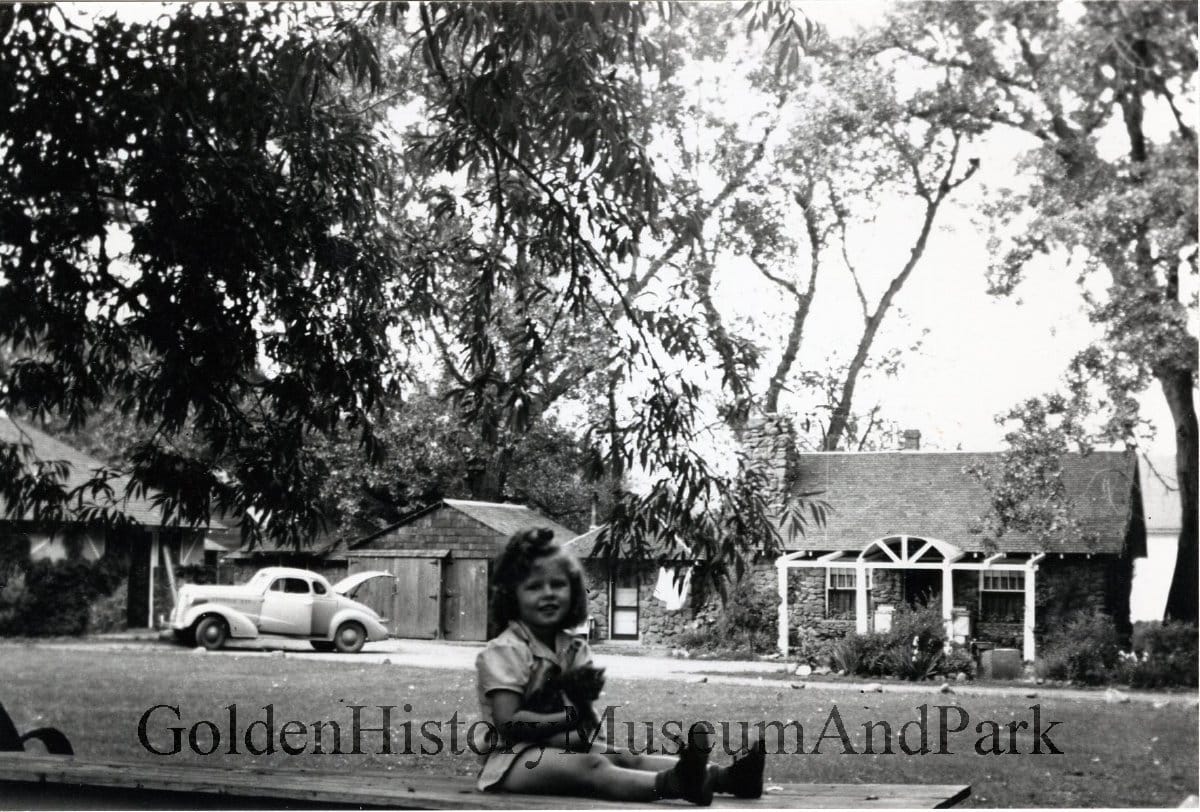
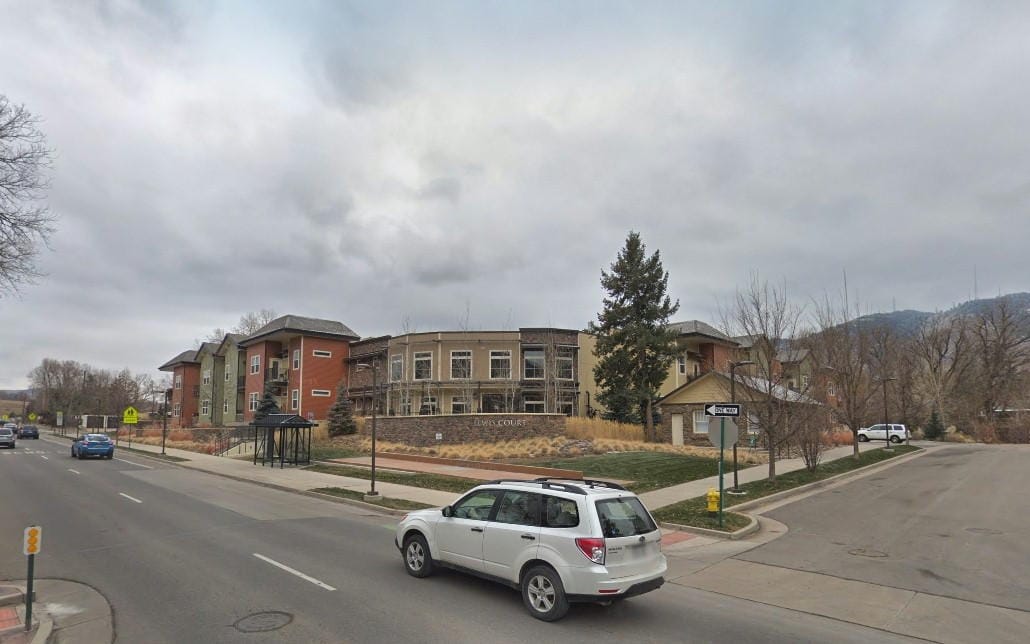
By the 1990s, the compound was called the Big Tree Trailer Court, which offered both trailer spots and cabins. In the early 2000s, the property owners decided to build condominiums on the site. The big cottonwoods were cut down in preparation for construction. The owners then became insolvent and the property stood–churned up and covered with felled cottonwoods–for several years.
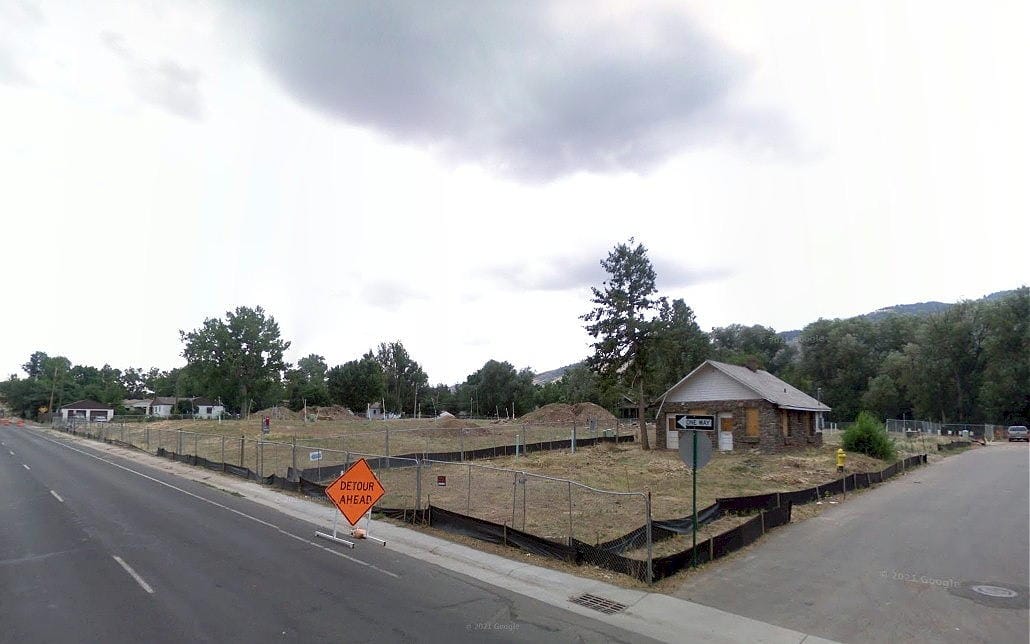
Finally, the Jefferson County Housing Authority bought the land and built Lewis Court, which opened in 2012. They demolished all but one of the stone cottages. It can be seen today at 22nd and Jackson.