By Donna Anderson
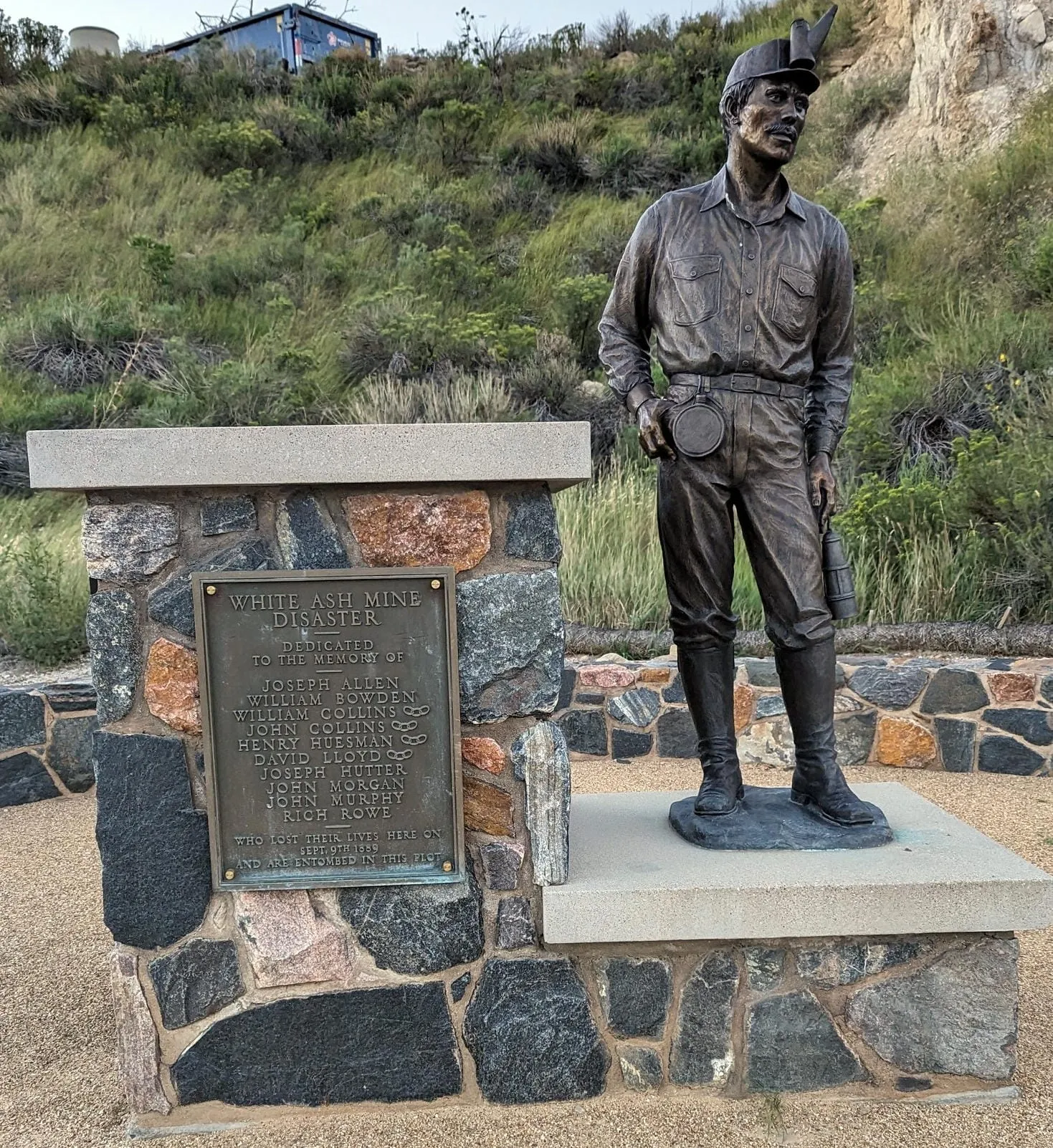
Today marks the 136th anniversary of the worst mine disaster in Golden’s history: The White Ash Mine disaster.
Part 1. The White Ash and Old Loveland coal mines
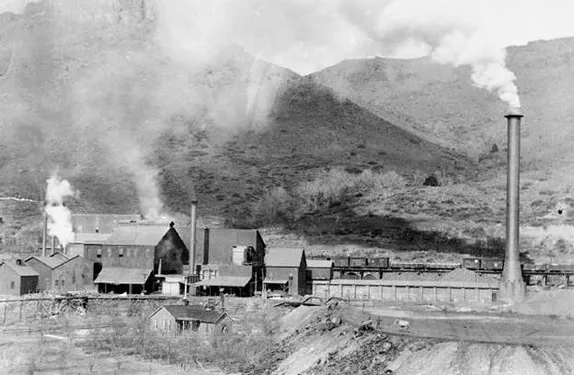
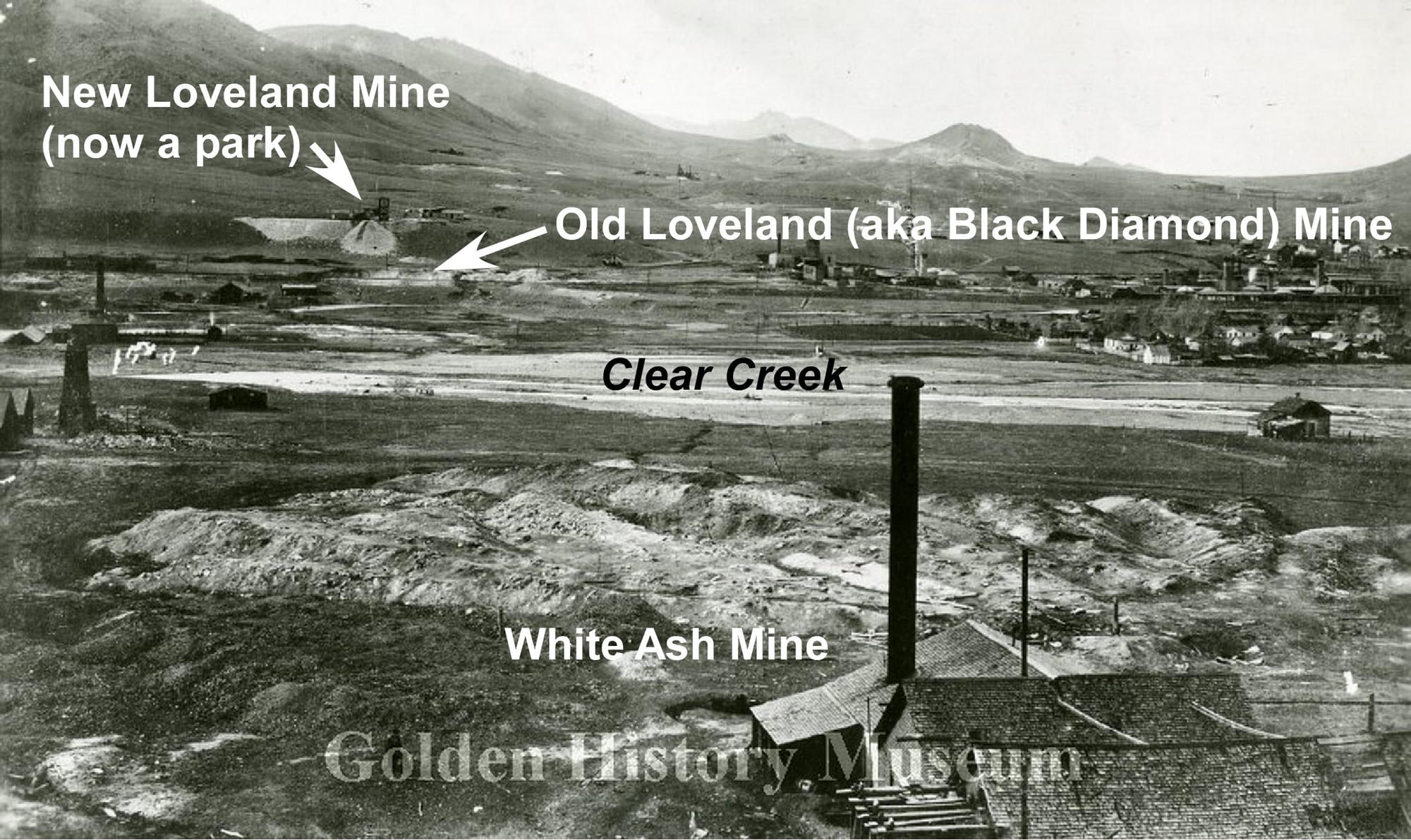
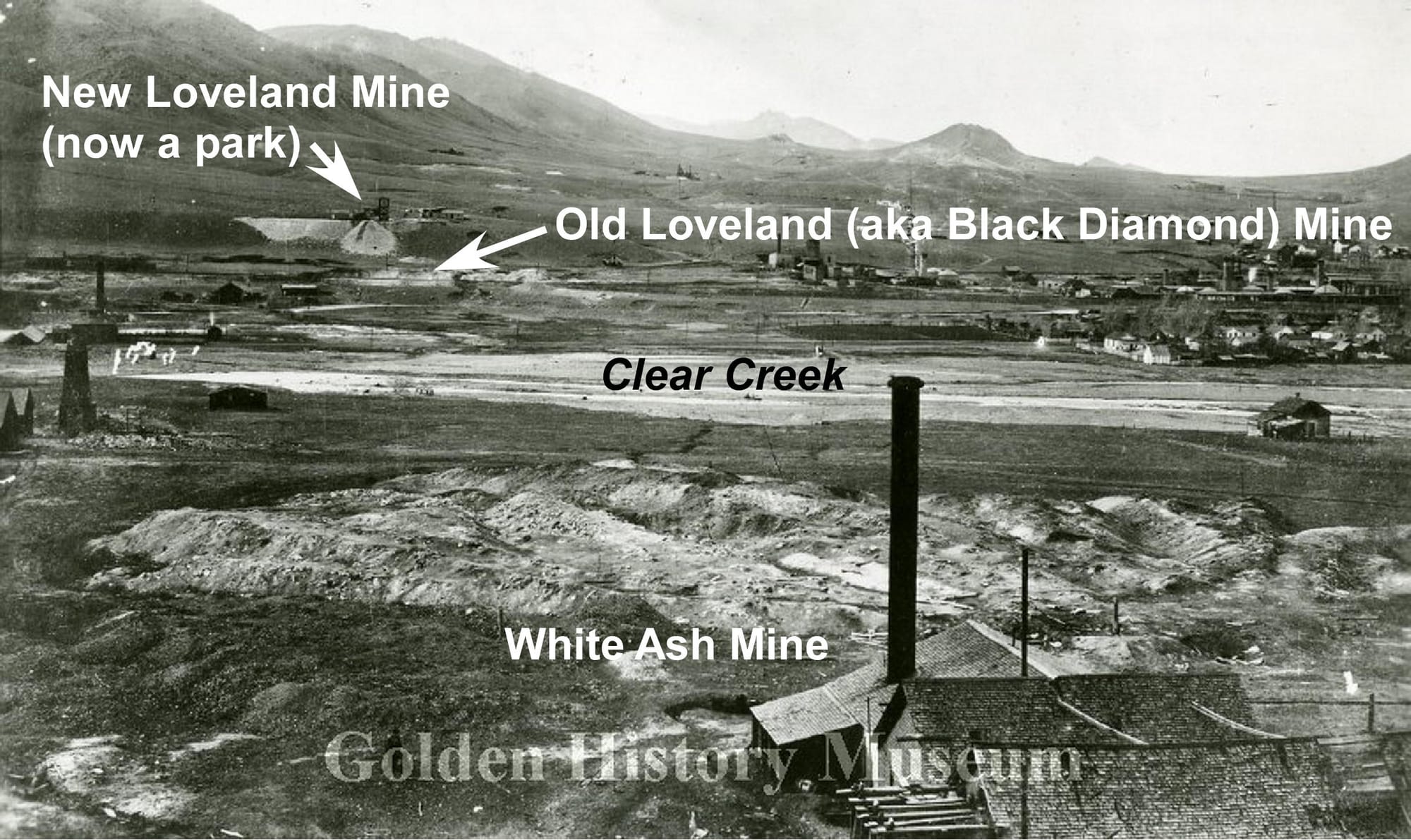
The White Ash coal mine was initially opened in 1874 by John Hodges and expanded in 1877 by R.D. Hall and A.L. Jones. It exploited a vertical coal seam, called the White Ash seam, so-called for its excellent burning properties that produced a clean, white ash. The mine portal was located at the west end of today’s 12th Street, and the vertical mine shaft and connecting horizontal tunnels were about 100 yards to the west.
At its peak, the White Ash Mine produced 50 to 100 tons of coal per day and employed 40 miners working three shifts. Typical of the time, though, the mine was beset with problems. Mining paused in 1879 when a fire broke out at the 280-foot tunnel level. The tunnel was sealed up, with the hopes that a lack of oxygen would smother the fire. In 1885, the Golden Fuel Company entered into a 99-year lease with John Hodges and Charles Welch. From 1885 to 1889, the mine was deepened and had several accidents from falling rock and equipment, as well as bad air from carbon dioxide gas, and fires on the tailing piles. By 1888 the new owners had extended the mine to 720+ feet below ground, making it the deepest coal mine in the State at the time.
In 1889, State Coal Mine Inspector and engineer John McNeil visited the mine several times, finally requiring replacement of unstable timbers, as well as the drilling of a 700+ foot deep escape shaft at the north end of the mine, north of Clear Creek. He also restricted the number of miners to ten for any given shift for safety reasons. The mine owners replaced the rotten timbers and began to plan for an escape shaft in the summer of 1889. In a letter dated July 12, 1889, twelve miners petitioned the State of Colorado to keep the mine open due to hardship. Thus operations continued without the escape shaft.

Meanwhile, the “old” Loveland, aka Black Diamond, Mine was about 1960 feet north of the White Ash Mine, across Clear Creek and along the same coal seam as that of the White Ash Mine. The old Loveland Mine had been abandoned in 1879 due to suffocating inert gas, carbon dioxide or “black damp”, at its (lowest) 250-foot level. The abandoned Loveland shaft and tunnels were left to fill with water from seepage. In 1889, water from the flooded mine was being used as a water source for the steam boilers at the nearby Golden Brick Works, located downhill from the old Loveland Mine.
As it turns out, the lowest flooded tunnel in the Old Loveland Mine was near the exact same level as the 280-foot tunnel in the White Ash Mine, which had been sealed off in 1879 due to the earlier fire. A pillar of rock and coal 70-100 feet thick separated the two tunnels. This separation apparently caused some commentary in McNeil’s inspections, but he and everyone else considered the situation “safe enough.”
To Be Continued…..