By Donna Anderson
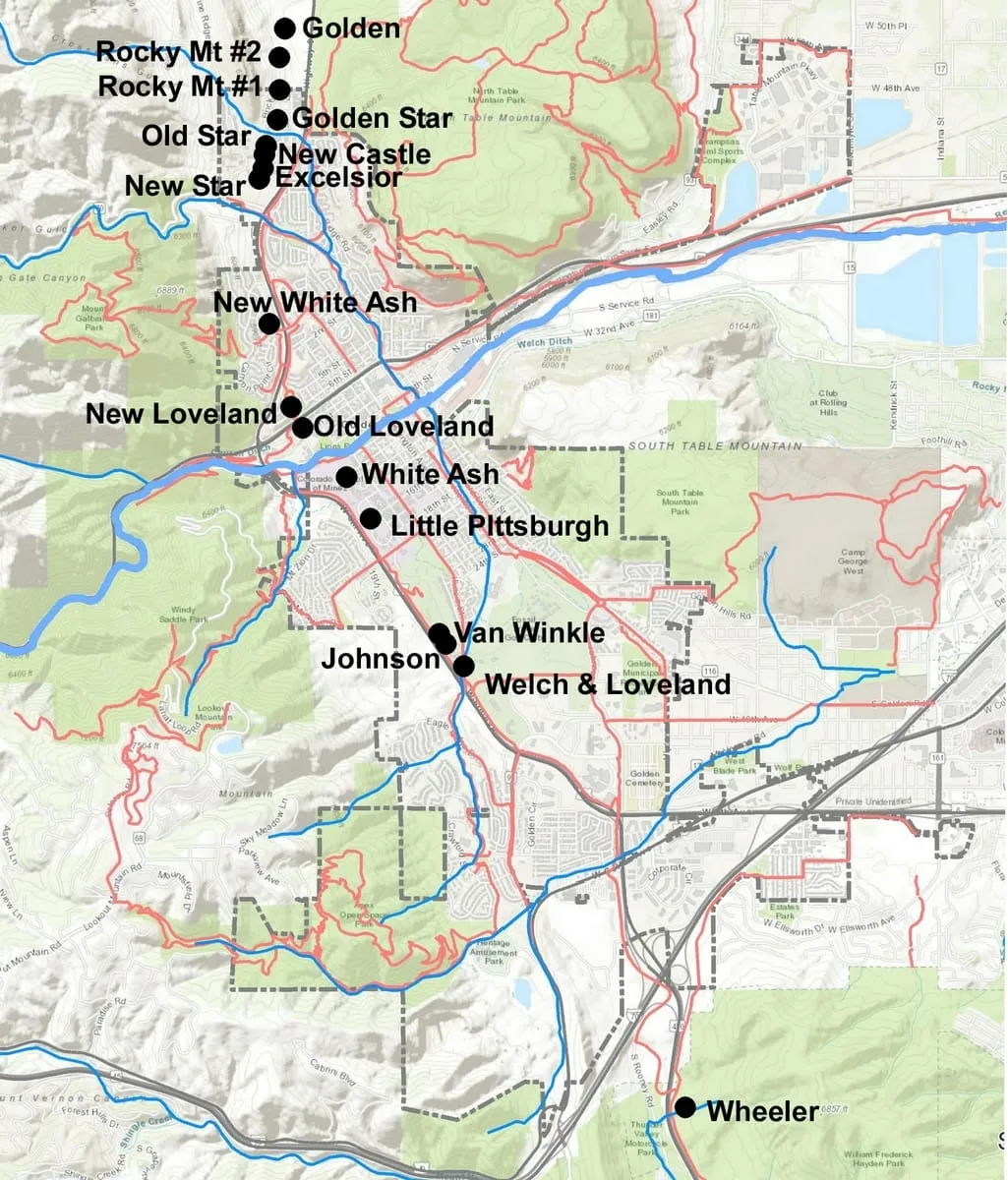
From the late 1860s to early 1890s, Golden had about 12 working coal mines. They were all lined up along a north-south line on the west side of today’s city limits, reflecting the geology of the Laramie Formation in which coal seams were located. Coal mining in Golden declined after 1900 due to the high expense of underground mining, competition from other coal fields, such as in the Boulder and Pueblo areas, and decrease in local demand for smelting use after the Financial Panic of 1893. The Denney coal mine, north of today’s US 40 (Colfax) and Zeta Street, was opened in 1933, as a big hope for local employment during the Depression, but only lasted a year. By 1940, no coal mines operated in Golden.
Mines were named after the owner/operator, properties of good-quality coal, and/or famous coal mining districts in other parts of the world. One of Golden’s early coal mines near todays’ West Campus Drive at Colorado School of Mines was the “Little Pittsburgh,” recalling the dominance of Pittsburgh, PA coal fields and industries. “Black Diamond” was another popular name, reminding how good-quality Golden coal had a shiny luster that twinkled like a diamond in the light. “White Ash” was a common name promoting how good-quality coal burned to a clean, white ash.
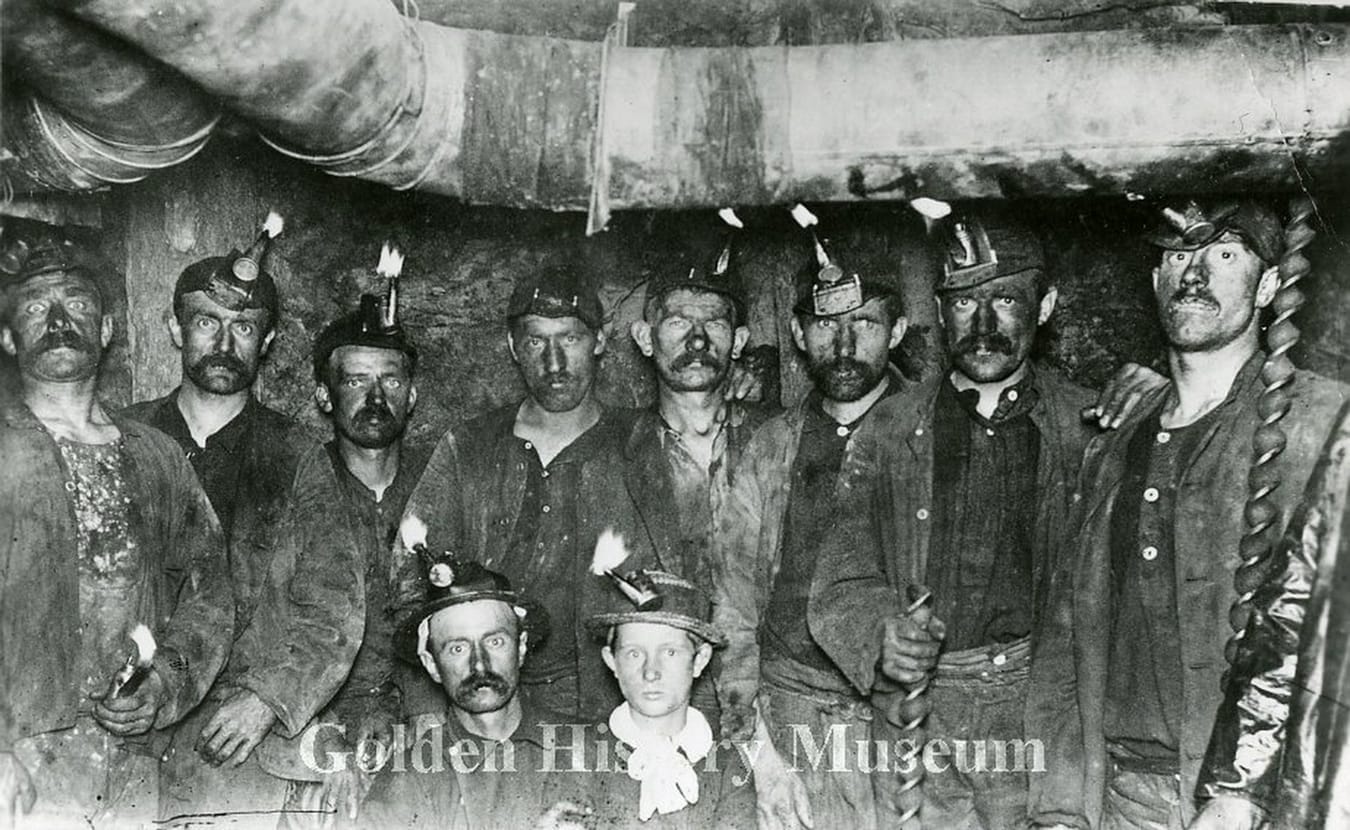
Who started and ran these mines? A combination of local business men, landowners, and coal miners from other mining districts leased mining rights and operated the mines. John Nicholls emigrated from Wales as a metals miner to the Pennsylvania coal fields and then to Golden where he established the Little Pittsburgh mine. C. C. Welch, who owned a large amount of land in the area around today’s Fossil Trace Golf Course, was heavily involved in promoting and financing, as was W.A.H. Loveland, Welch’s business partner. The early coal miners themselves hailed from England and the Appalachian coal fields of the eastern U.S., and in some cases, local boys.
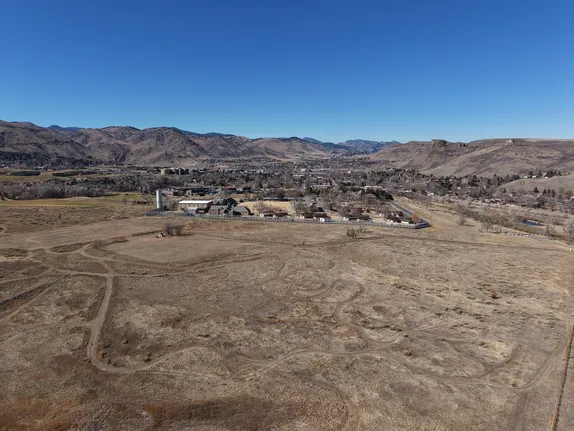
A legacy of coal mining was the collapse of the ground surface above the abandoned mine shafts and side tunnels. Today, two Golden city-parks commemorate coal mining: New Loveland and New White Ash Mine parks, both north of Highway 58. The parks form buffer zones around the old mine workings. Also, a strip of ground in north Golden, paralleling New Star Way to Brickyard Rd., has restrictions on building types due to coal-mine subsidence.
Black diamonds formed a major part of the late 1800s history of Golden: perhaps a surprising story!
Sources:
Amuedo and Ivey, 1978, Coal and clay mine hazard study and estimated unmined coal resources, Jefferson County, Colorado, prepared for the County of Jefferson and the cities of Arvada, Golden and Lakewood, Colorado.
Carroll & Bauer, 2002, Historic coal mines of Colorado, Colo. Geological Survey Information Series 64.
Golden History Museum online collection, and digital editions of the Colorado Transcript.
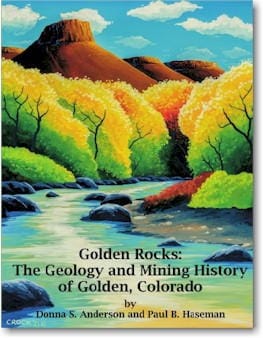
Author Donna Anderson, along with Paul Haseman, wrote Golden Rocks: The Geology and Mining History of Golden, Colorado by Donna Anderson and Paul Haseman. It's a terrific book. You can buy a copy from the Lulu website, borrow one from the library (there’s usually a waiting list!), or read it online for free.