
Golden was settled in 1859, but wasn’t incorporated until January of 1871. The governing body of the nascent town was called the Board of Trustees (rather than City Council) and the leader of that Board was the President (rather than Mayor).
The first Ordinance that this new Board approved (in January of 1871) concerned liquor licenses. A liquor license cost $50 and was good for three months. A beer license cost $25 and was likewise good for 3 months at a time.
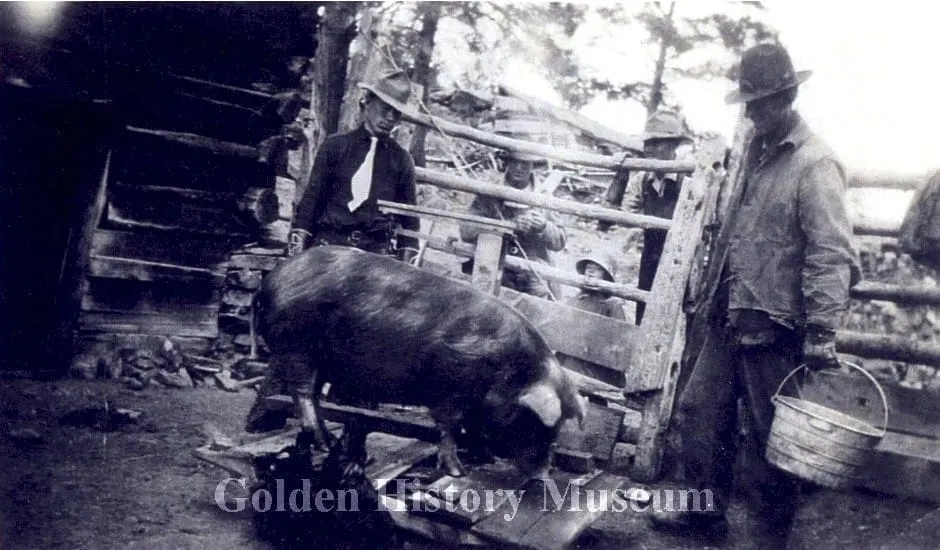
The second Ordinance concerned loose livestock: “all hogs, shoats and pigs running at large within the Town of Golden are hereby severally declared to be nuisances, and any person being the owner of any such animals, who shall suffer the same to run or be at large or to be found at large, shall be deemed the author of a nuisance and shall on conviction, be fined in a sum not less than two nor more than twenty dollars in each case.”
“It is hereby made the duty of the Town Constable to take up and confine in a secure pen, pound, or other place to be by him provided for that purpose every hog, shoat or pig found running at large within said Town of Golden.” The Constable was assigned to keep the animals confined until the owner claimed them and paid a fine. If no owner claimed an animal, the Constable was to sell it and provide the money to the Town.

The Town’s third ordinance called for the Constable to arrest anyone in a state of public intoxication.
That early Board of Trustees gave much more attention to loose “hogs, shoats and pigs” than it gave to drunkenness or other crimes. We must have had quite an infestation of livestock.