By Tom Schweich
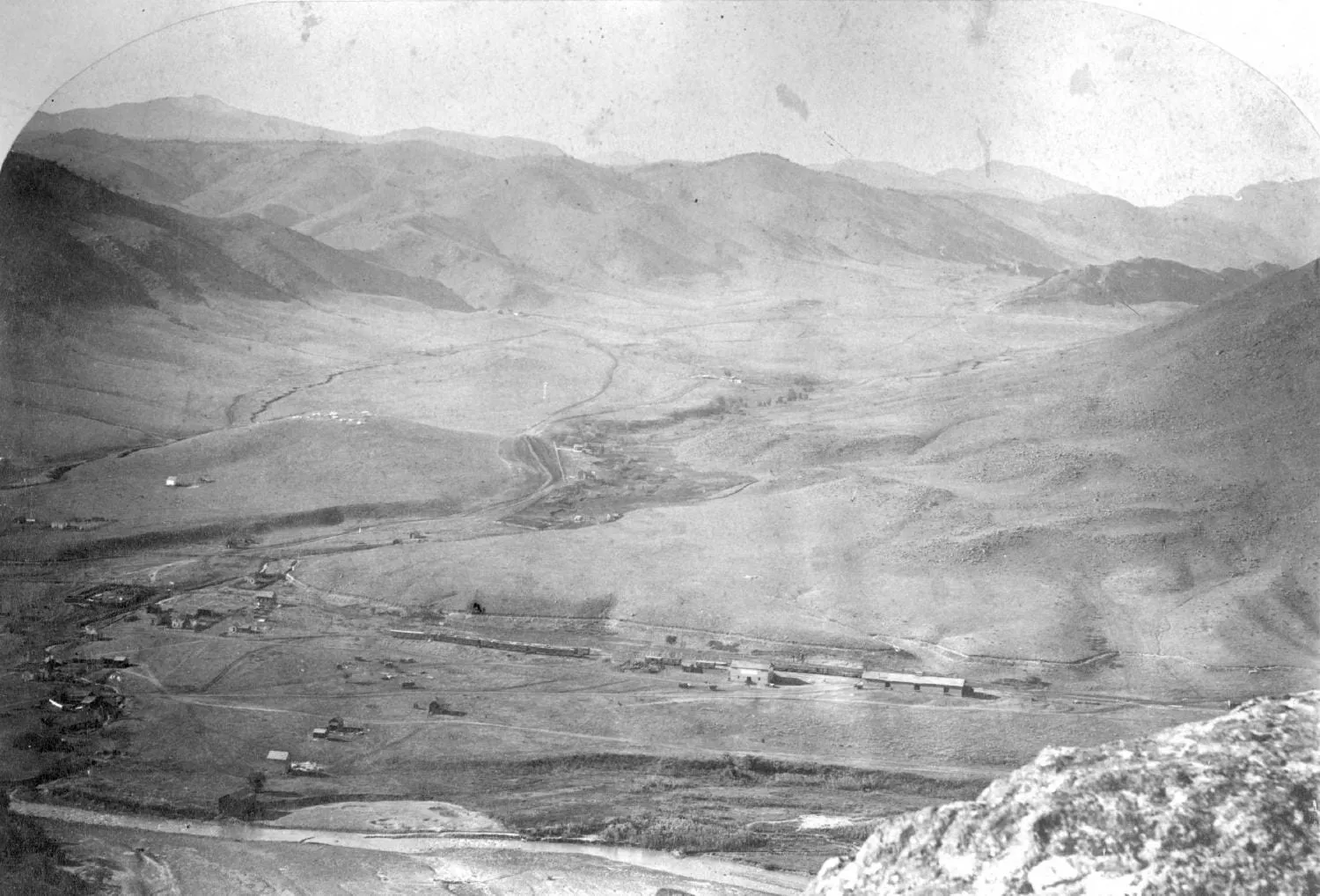
The native vegetation of Golden was a mixed-grass prairie with cottonwoods and willows along the creeks and watercourses, and mountain brush on the slopes of the mesas and adjacent mountains. The photo of north Golden taken from Castle Rock by William G. Chamberlain on September 26, 1870 probably best illustrates the original conditions. A very similar view today will be included in Part 2 of this article (next week).
Tucker Gulch is in the center of the photo, while Clear Creek crosses the bottom of the photo from left to right. On the left are the slopes of Mount Galbraith and on the right are the lower slopes of North Table Mountain. Cemetery Hill, now Gregory Drive, is the small hill in the left middle ground.
The landscape between those features is the mixed-grass prairie. It looks smooth and featureless, but it was really a vibrant biological community highly adapted to our harsh winters, hot summers, and inconsistent rainfall. “Prairie” is a French word that translates to the English “meadow.” A mixed-grass prairie has a mixture of short and tall grasses ranging from 4-inch tall Buffalo Grass (Bouteloua dactyloides) to the 3 to 5-foot Big Bluestem (Andropogon gerardii). A prairie is not just grasses, though, because it also has many forbs, i.e., perennials that are not woody, a few shrubs, and maybe a few small trees. Native prairie forbs that you may grow in your garden as wildflowers are Blanketflower (Gaillardia aristida), Prairie Coneflower (Ratibida columnifera), Rocky Mountain Beeplant (Peritoma serrulata), or Purple Prairie Clover (Dalea purpurea). Whole-Leaf Paintbrush (Castilleja integra) is difficult to grow in a garden, but often seen in the prairie around Golden.
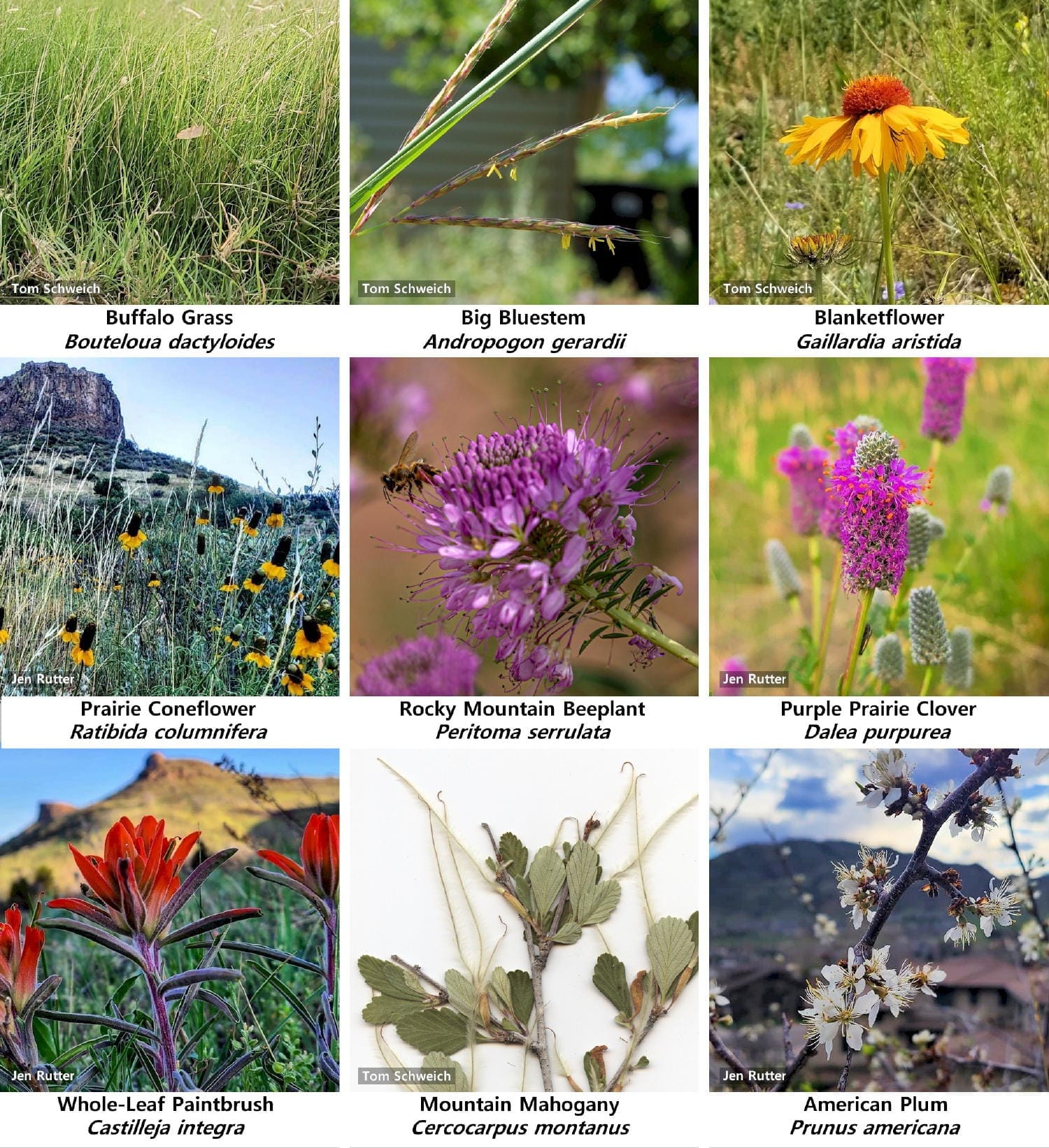
The best place to see a remnant of Golden’s mixed-grass prairie is on Schweich Hill. This 4 acre City of Golden-owned parcel has about 1½ acres of nearly intact mixed-grass prairie at the top of the hill. Kinney Run North and Kinney Run South are other places to see native Golden vegetation. They have more diversity of habitat ranging from riparian (streamside) to mountain brush with Mountain Mahogany (Cercocarpus montanus). North Table Mountain is also an excellent place to see Golden’s native vegetation. Early in April large patches on the mountain will turn white, not from snow, but from the flowers of American Plum (Prunus americana). The fragrant flowers of this plant open before the leaves come out.
About 670 different plant species have been identified in Golden and vicinity, of which about 500 are native here. There are also about 170 non-native species of plants; 37 of them are listed Colorado noxious weeds.
The second part of this article will appear in next Monday's post.