
by Dr. Donna Anderson
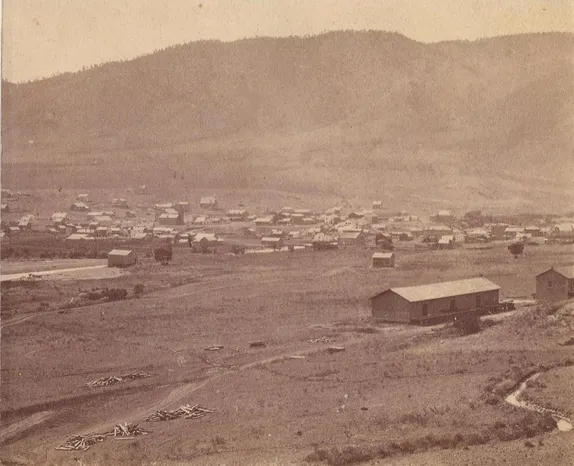
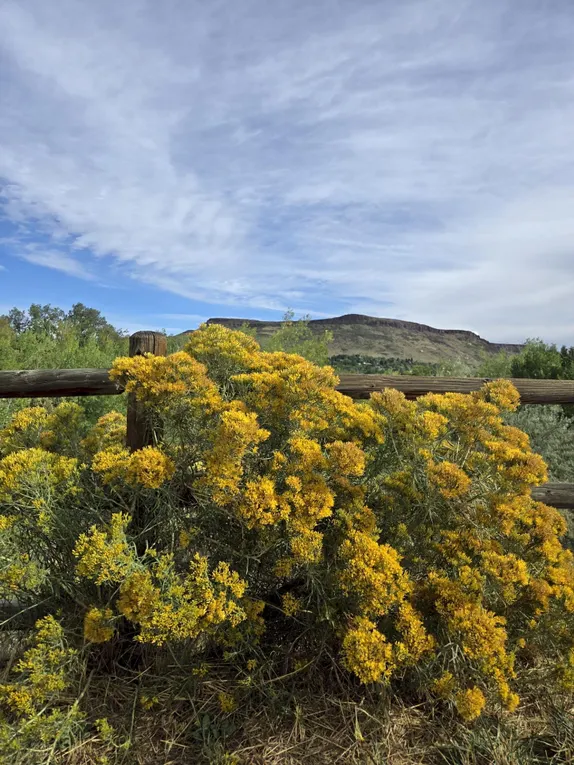
Living in Golden and the greater Denver area now with all the green trees and lawns, we forget that we are actually living in a semi-desert. On 5 July 1820, Stephen H. Long and his men camped for few nights at what is now the confluence of Clear Creek and the South Platte River. The next day four men in the party headed up Clear Creek, intending to walk all the way to the western foothills in Golden. They described the surrounding plain as covered with prickly pears (cactus) and “sparse rigid grasses with barbed seeds like the quills of a porcupine.” Cactus and prairie grasses (Fig. 54), not lawns and trees, are the native vegetation of the semi-arid region surrounding the greater Denver area, including Golden.

When Euro-Americans came to Golden in 1859, they needed water for drinking, cooking, and livestock-watering, as well as to establish farms to grow food. Farms required water in the form of irrigation, and perennial creeks like Clear Creek were steady, sure water sources. Little wonder that settlers established western towns like Golden along perennial streams and rivers. Early Euro-American settlers not living next to perennial streams commonly used shallow, hand-dug groundwater wells as a water source: a lot of work! Groundwater is still used in Golden, but not commonly for drinking water, because the Golden municipal water system serves most homes and businesses.
Resourceful Clear Creek
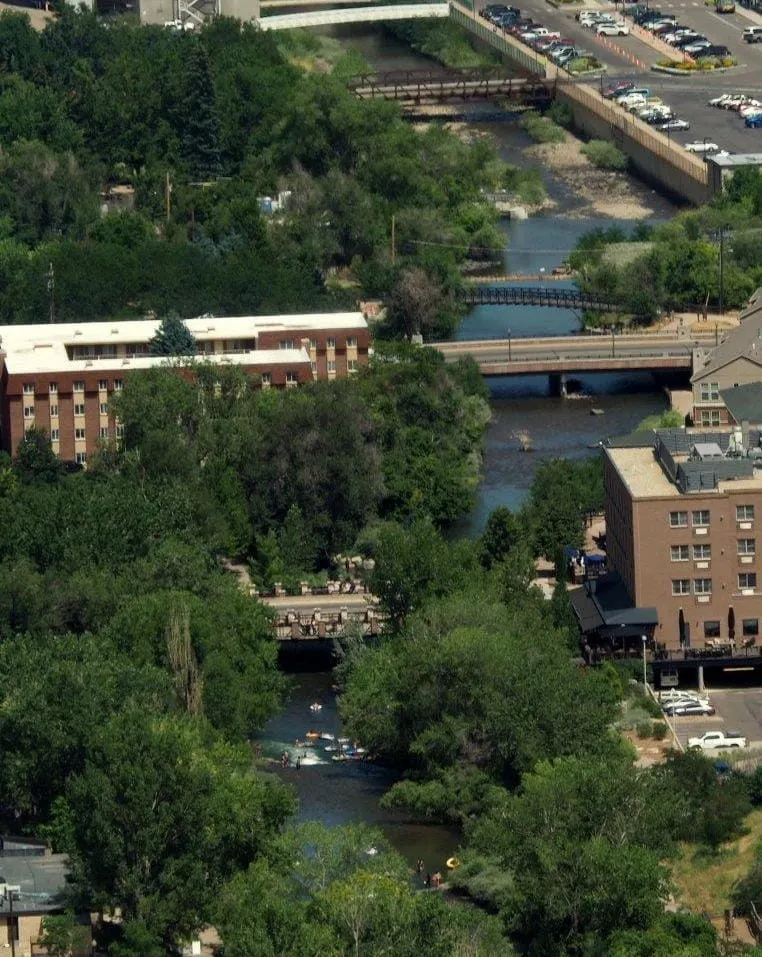
Clear Creek is the main source of drinking and irrigation (now mostly for landscaping) water in Golden. It is also a main source for downstream users such as Coors Brewery for industrial use, and for the cities of Arvada, Thornton, and Westminster. Today it provides drinking water for more than 300,000 people.
Euro-American settlers in this semi-desert region diverted water from the Creek for various uses. The first irrigation diversion in northeastern Colorado was right in Golden. In April 1859 David K.Wall diverted water from Tucker Gulch for his vegetable farm near the current railroad yards in east Golden. This was also Golden’s first vegetable garden. Wall made more money selling vegetables than did most miners seeking gold. The first two permanent diversion canals, or ditches, began construction in late 1859, finishing in early 1860. The diverted water operated sluiceboxes for mining placer gold in the gravels at Arapahoe Bar, located three miles east of downtown Golden (see Chapter 8, also). It was one of the first gold discovery sites along Clear Creek. Later these two ditches became the Wannemaker-Arapahoe and Farmers Highline Ditches, used for irrigation.
After 1860, surface water was diverted from Clear Creek for Golden and other irrigation users through ditches that started in and upstream from Golden. The first two irrigation ditches completed were the Rocky Mountain (1862) and Church (1865) Ditches. The Welch (1871) and Agricultural (1874) Ditches were built afterwards. The timing is important due to water rights, discussed below. All or portions of these ditches are still used. Modern use, however, is mostly for domestic and industrial purposes, rather than agricultural irrigation. How much any user can take, and within which part of a year, is the subject of water rights
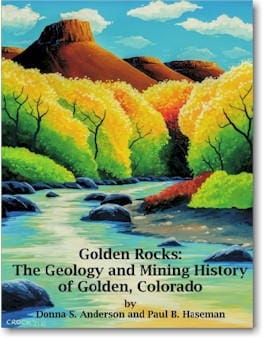
This was an excerpt from Golden Rocks: The Geology and Mining History of Golden, Colorado by Donna Anderson and Paul Haseman.
The authors have granted me permission to reprint excerpts, but I recommend that you read the whole book. You can buy a copy from the Lulu website, borrow one from the library (there’s a waiting list!), or read it online for free, courtesy of the School of Mines library.