120 Years Ago
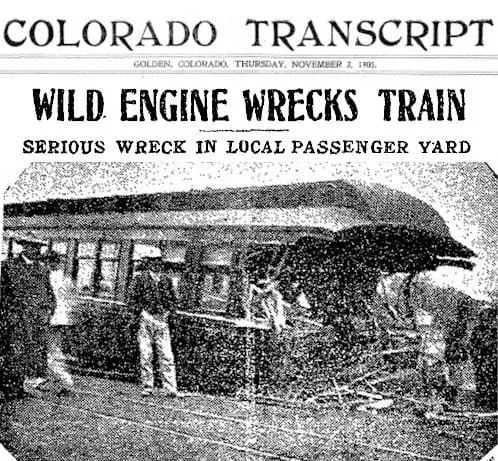
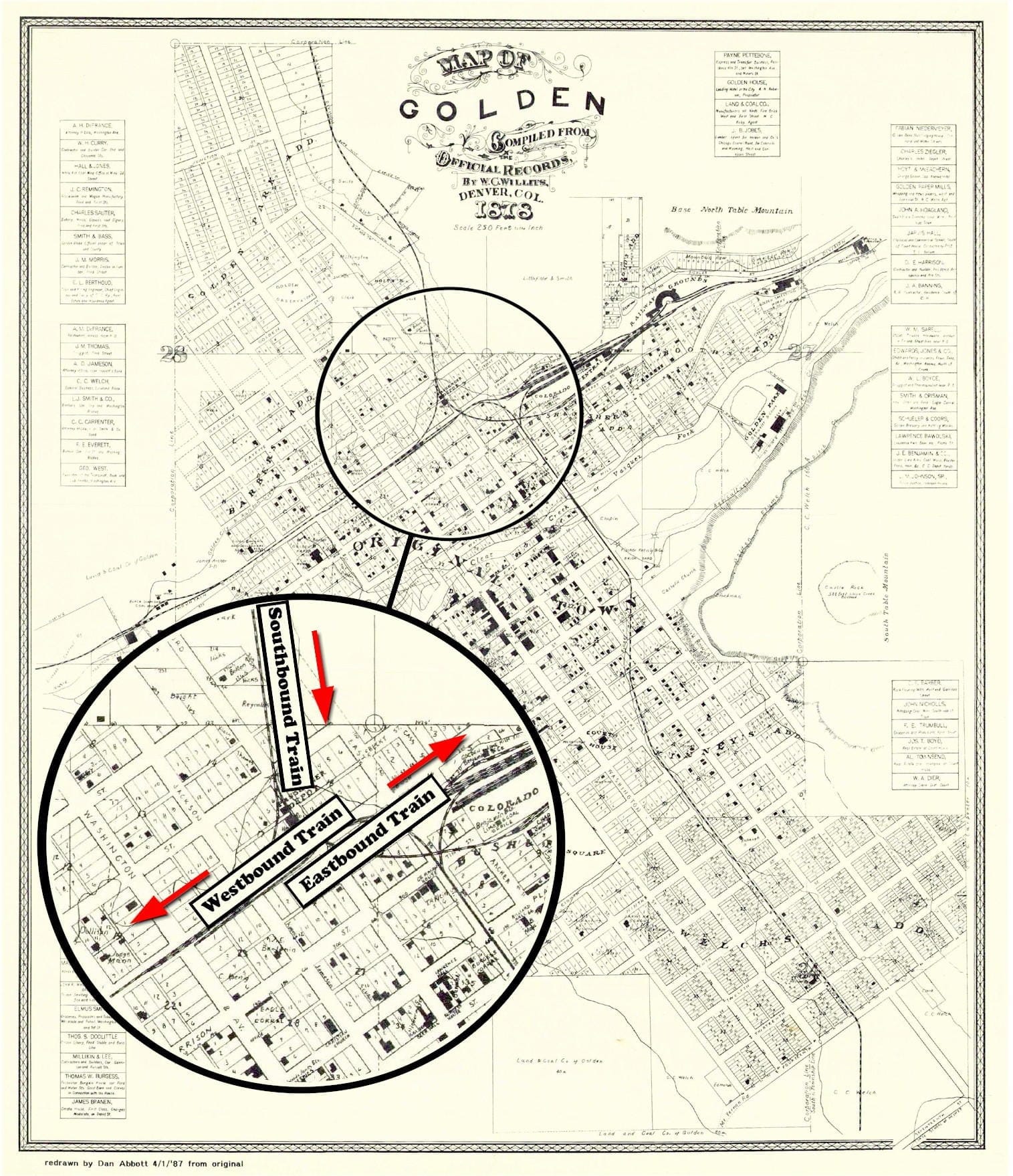
The November 2, 1905 Colorado Transcript reported a terrible train accident. A southbound train was coming downhill, on tracks that paralleled Tucker Gulch. Two trains–one eastbound, for Denver, and one westbound, for the mountains–waited on tracks at the bottom of the hill. The rails were wet and the hill was steep. The engineer of the southbound train lost control and rammed the westbound train.
With a noise that was heard all over the city, the crash came. The two rear coaches were lifted high in the air….
Colorado Transcript – November 2, 1905
Seven people were seriously hurt, with sprains, bruises, a dislocated shoulder, some broken ribs, and many cuts from flying glass and splinters.
What struck me most about the article was the relentlessly upbeat (“it could have been so much worse!”) tone. It emphasized that no one died. When the passenger coach was struck, the stove (used to heat the car) was “broken and overturned,” but (miraculously) did not start the wreckage on fire. The passenger who sat next to the stove was covered with shattered wood and seriously injured, but not killed.
The railroad employees showed “presence of mind,” “quick action,” and “Herculean effort.” The article ran through scenarios that could have made the accident worse.
The Transcript stated emphatically that “No blame can be attached to any of the trainmen, and the accident was due wholly to the wet rails and heavy grades.”
It was a less litigious time!