
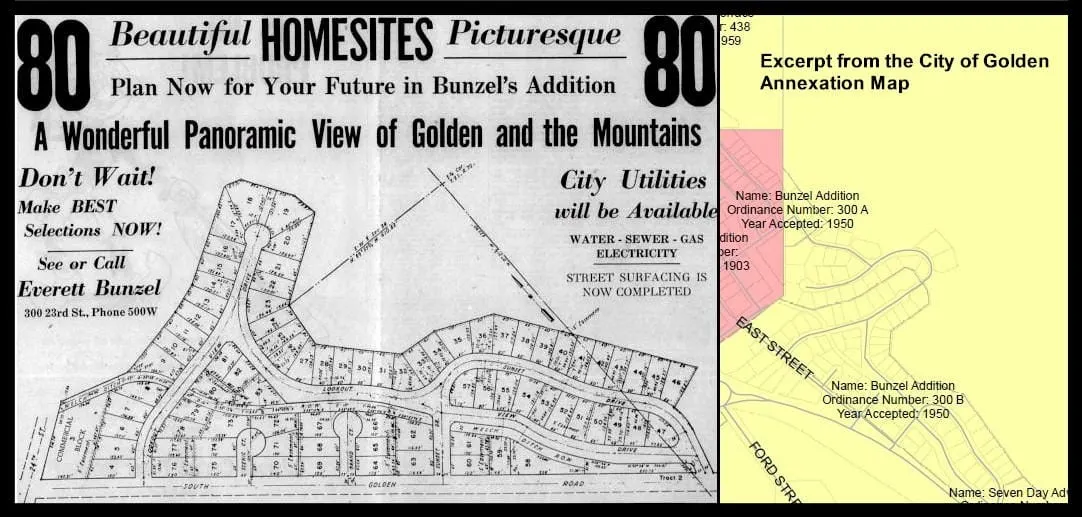
You may have heard terms like “Welch’s Addition, and “Bunzel’s Addition,” to refer to certain neighborhoods. The original boundaries of the City of Golden were laid out in 1871. Since that time, we have annexed many additional parcels to be part of the city. The parcels are sometimes called “Additions.” At other times, the City’s annexation map just shows the name of the developer or some other descriptive name; for example–“Morey Gibson, year accepted 1969,” or “Tripp Ranch, year accepted 1988.”
Bunzel’s addition was annexed to the City in 1950, as part of the big post-WWII house-building frenzy.
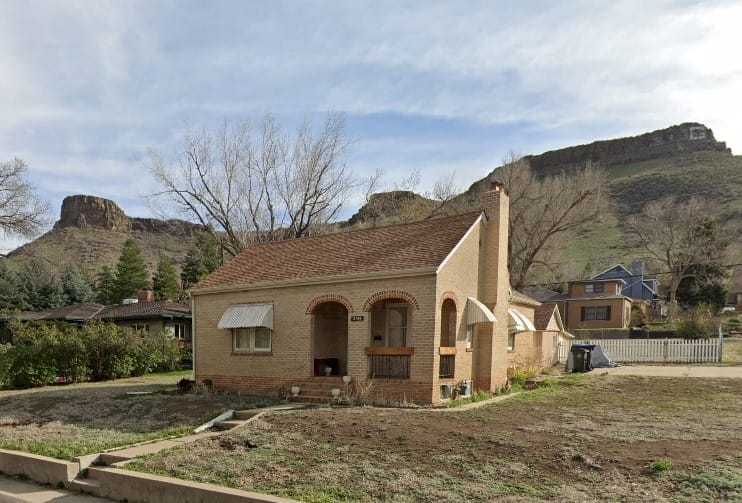
Who was Bunzel?
Everett Bunzel’s first appearance in the Colorado Transcript was in 1930, when he was graduating from Junior High. Interestingly, he graduated in the same class as the late Bill Coors. Bill was the class valedictorian. The Bunzel family lived in Pleasant View, where the father, Charles, had built a cobblestone house. Charles died in 1933, leaving a wife and four children. Everett was the oldest child, at 16.
Everett joined the navy after his high school graduation, in 1934. He was back in Golden by 1941, living at 2149 East Street. He worked as a mail carrier during World War II and began investing in and selling real estate in the area near his home (at 22nd and East).
In 1945, he bought several more lots in that area for back taxes. The land had belonged to Charles Quaintance (who owned the Castle Rock Funicular). By 1947, Bunzel was selling “Beautiful Building Sites in one of Golden’s Most Desirable Residential Areas.” These sites were within the Welch Addition.
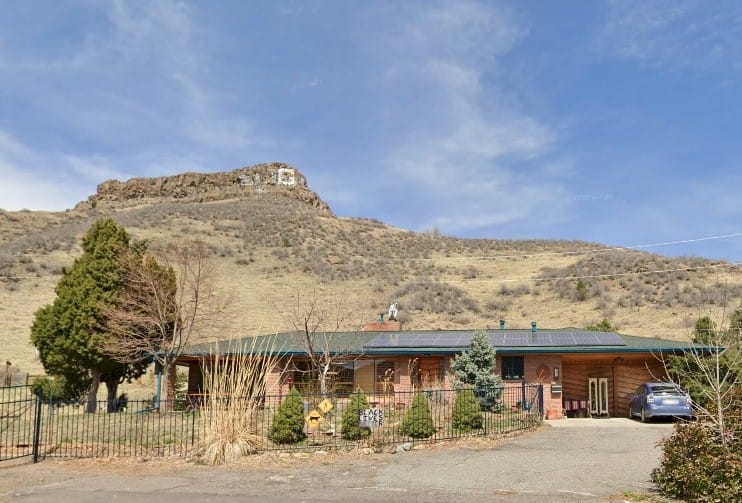
By 1950, he wanted to sell more building sites in the area, this time creating his own Addition to the city. The 76 homesite Bunzel Addition got off to a rocky start. City Council gave preliminary approval to the addition in August, but Bunzel wanted to build 55 foot-wide streets instead of the 66 feet width required by code. He also wanted the lot for his own home to be excluded from the city. The two sides faced off on those issues until November. At that point, the city yielded on the street width and Bunzel agreed to include his own lot in the City limits.
By mid-1951, the City had extended their water and sewer lines to 24th and Ford, and Bunzel took it from there, laying the lines into his new subdivision. Bunzel had to pay $150 per homesite for sewer connections and $50 per site for water taps.
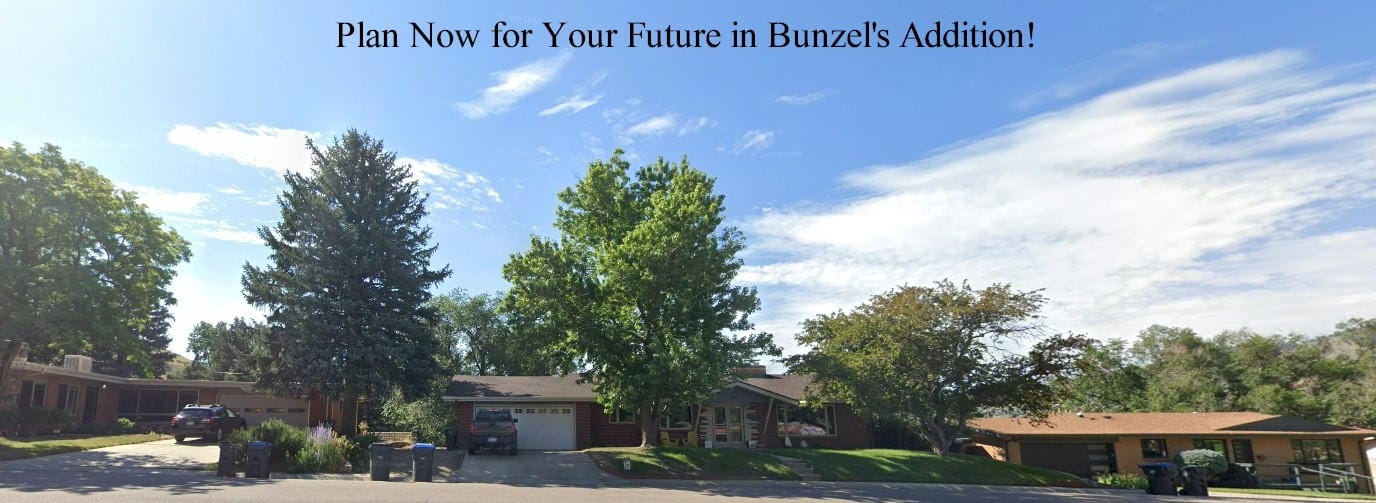
The first family to move into the subdivision (at 419 Lookout View Drive) was Mr. and Mrs. Roy Meyer and their children. Mr. Meyer and his brother Joe owned Meyer Hardware. Other families soon followed. Street signs were installed in the summer of 1953, so the post office began to provide mail delivery that fall. Curbs and gutters were added and the streets were paved in 1956.
The lots were large, and most of the homes were custom designed in the mid-century ideal: long, sprawling ranch homes.