ONLY 34 ARE UNEMPLOYED IN GOLDEN
Welfare body hunting jobs; clothing needed
One hundred and fifty-eight women and children are vitally interested in the success of the Golden Welfare association's campaign to "make a job for a man." These are the dependents of the 34 men who have registered as being out of employment in Golden and vicinity.
Colorado Transcript - November 19, 1931
94 Years Ago
In 1931, Golden was mired in the depths of the Great Depression. The town's biggest employer, Coors, was no longer making beer due to Prohibition. Their malted milk business provided some jobs, but not as many as the brewing business had.
With no federal safety nets in that pre-New Deal era, the community was organizing its own "Golden Welfare Association." It was first mentioned in the October 29th edition of the Transcript. The Association hoped to connect unemployed men with people who companies that might need help.
The November 5, 1931 issue reported that the Association was looking for a space where they could establish a Central Headquarters. So far four men had applied for work. The November 19 provided an update saying that the number had increased to thirty-four.
The December 10, 1931 Colorado Transcript wrote about a new Golden Welfare Fund. The Welfare Association's recent survey had shown that many “heads of household” in Golden were unemployed, and that their families were deprived of food, clothing, and fuel. The new Welfare Fund was designed to accept donations of cash, clothing, and food. The board members were encouraged by their initial canvass of the community. Many Golden teachers and employees at the School of Mines had pledged to donate a certain amount from their wages.
People were squeamish about the term “charity,” so the board was careful to explain that recipients had to work in order to receive relief funds. Women and children were exempt from the work requirement.
Most of the men did street work: a February 11, 1932 article reported that the Welfare Association was spending about $16 a day for labor. By that time, twenty blocks of city streets had been graveled. The crews were employed three days a week. The workers were paid with credit to local stores, rather than cash.
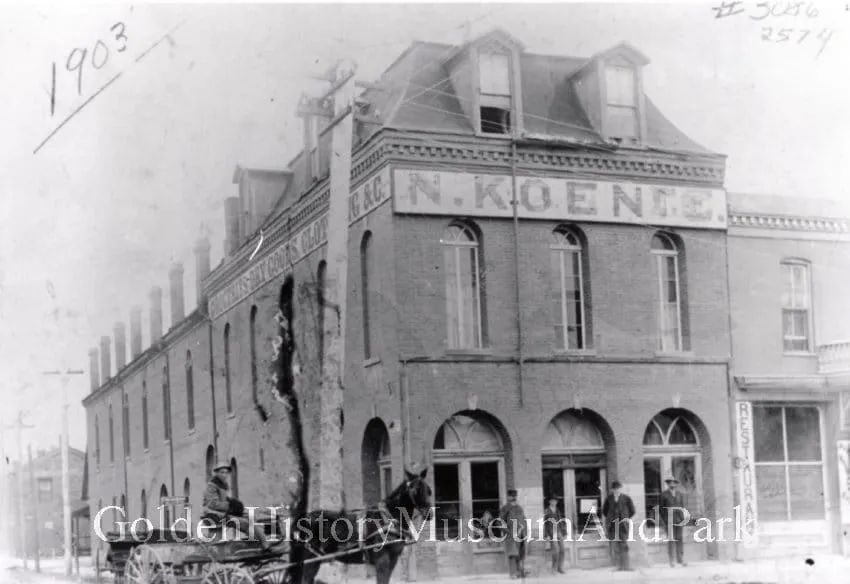
The Koenig Mercantile at 12th and Washington was providing a storeroom for donated clothing and food, and volunteer relief workers were there on most days to distribute the goods. The Red Cross was providing coal for needy families, and the Golden Relief Association was in charge of distributing it.
The relief program ended in the spring. Apparently, it was assumed that families could take of themselves during warm weather. The following November, a new funds drive was organized, and the program was resumed.
Transcript references to the Golden Welfare Fund dwindled after Roosevelt was elected, as Federal Government programs began to provide government work as well as old age pensions.