
165 Years Ago
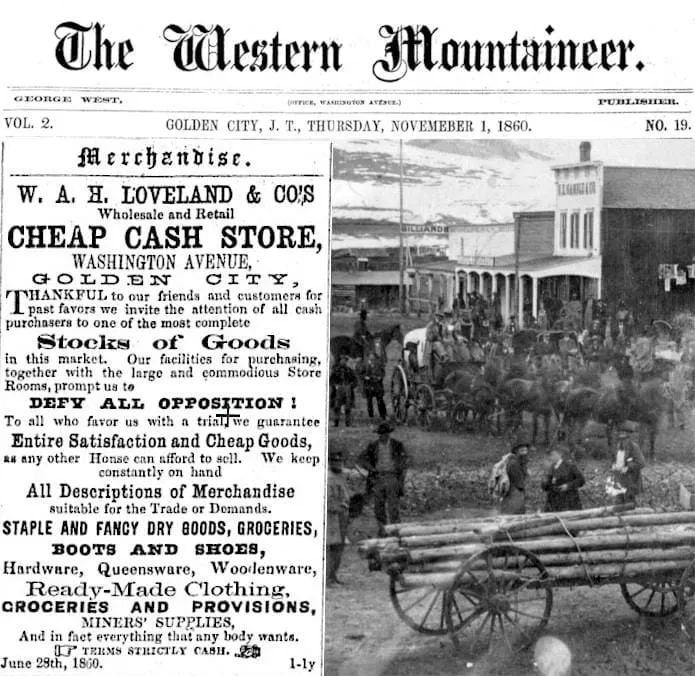
The November 1, 1860 Western Mountaineer (Golden’s first newspaper) reported on the trains that were arriving and the goods they brought.
W. A. H. Loveland & Co.’s train arrived in this city on Saturday last, and have discharged at their store on Washington Avenue. L. & Co. now have a large stock of goods in store, and sell as low as any other firm in the country.
This article predated the arrival of railroads by a decade. The term “trains” referred to wagon trains. At that time, merchants needed to return to “the states” to replenish their inventory. The closest city of any size was St. Joseph, Missouri. The trip took approximately six weeks, each way.
Mr. John Armor’s train of twenty wagons arrived on Monday, and discharged a portion of their freight, the balance of which goes to the mountains.
The trip was long, tedious, uncomfortable, and at times dangerous. The state of the wagon roads was always newsworthy.
Both the above trains came in over the St. Vrain and Golden City road, to take advantage of the superior feed, and to avoid the annoyance arising from the large number of dead cattle upon the Platte and the Cut-off. Mr. Armor informs us that his wagons are loaded heavier than usual, each one having from 6000 to 7000 pounds. He says that he shall in future bring all his trains in over the St. Vrain road, as it is much less severe for the feet of his cattle.
“Cattle” probably referred to the oxen used to pull the wagons.