
111 Years Ago
The November 25, 1915 Colorado Transcript recounted a lively week for local news.
Murder
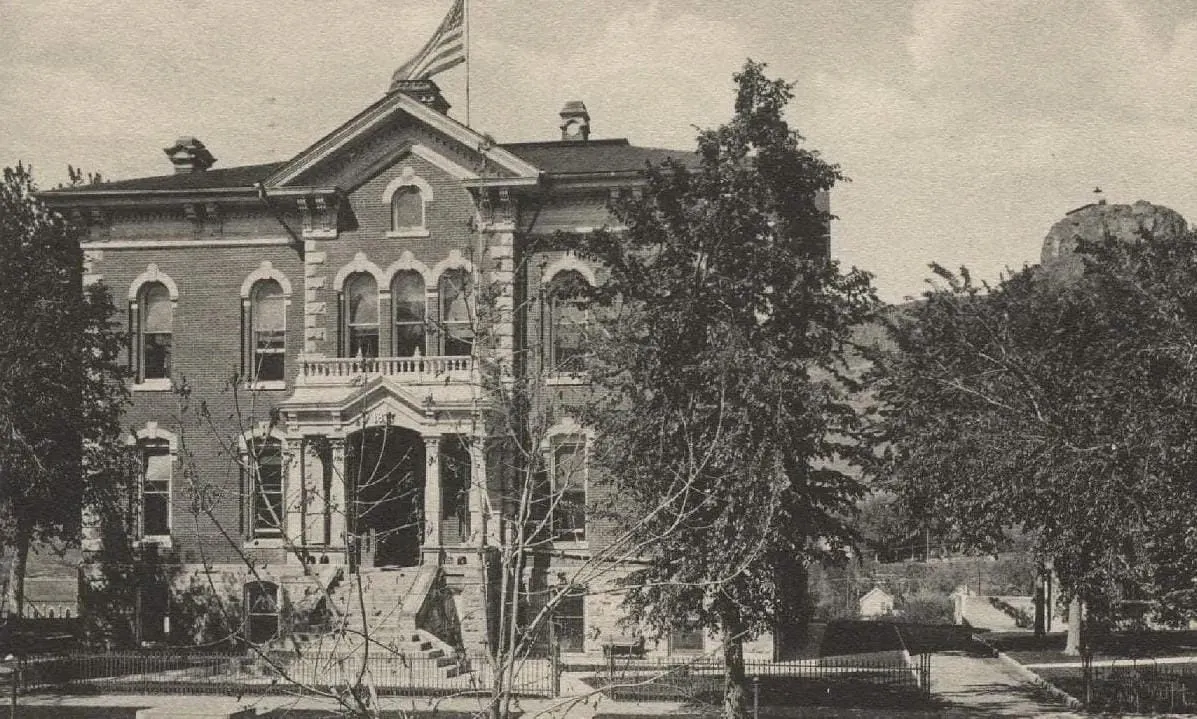
A murder trial was held in the County Courthouse. Fred Wallace had invited Archie Briscoe to his home to discuss payment of a fine for bootlegging. Wallace had paid $65 and wanted Briscoe, his partner, to pay half of the fine. Briscoe gave him only $10. Both men were drunk. Wallace shot at Briscoe. Briscoe returned fire and killed Wallace.
In another wrinkle to the story, Mrs. Wallace had been on the verge of running away with Mr. Briscoe. "Her husband told her that he didn't want her anymore [and] he threw her clothes out of the house and locked the door on her." Briscoe was found guilty of manslaughter, with a sentence of 1-4 years in the penitentiary.
Exotic Accommodations
The jurors for the murder trial were sequestered overnight. Because of a mix-up at the hotel, they did not have room reservations, so the sheriff put them all on cots in the jail. "The beds were nice and clean, the upper floor of the jail never having been occupied by prisoners. Each juror had a cell to himself. The bailiff...occupied the padded cell and says he has been feeling a little crazy ever since."
Efficiency and Thrift
The Transcript staff wondered how the judge could conduct a murder trial in only two days. They pointed out that Denver murder trials take weeks "with all the slimy and sordid details which go to the 'red ink stuff' for the Denver papers." They asked the judge why Golden trials were so much quicker. He said it was because we had a better district attorney: "...no time is...wasted on senseless arguments over elementary principles of the criminal law." The Transcript reported that our speedy trials were saving taxpayers thousands of dollars.
In Other News
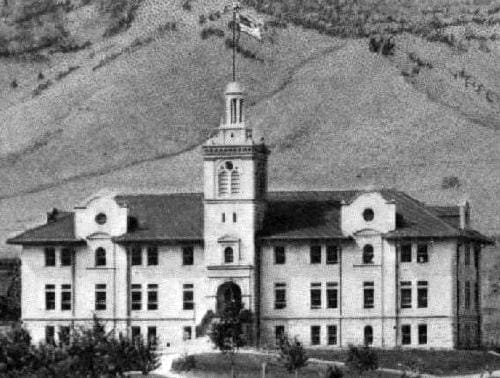
A Mines freshman had been injured some weeks earlier, while roller skating in Alamosa. He returned to school in Golden with splinters still in his leg. It became infected, but he ignored it. He finally felt so stricken that he went home to his parents in Denver. He soon died. The parents, angry at what they saw as inadequate attention by the School of Mines, spoke to a Denver newspaper about his death. The Denver Post claimed that arsenic in the soil at the Mines football field had killed the boy. The Transcript printed a rebuttal on the front page, saying that the boy had been injured at a skating rink, not a football field, and that he had never reported his injury to the school.
Postal News
The U.S. Postal Service announced plans to convert rural mail routes to motorized vehicles. A representative for the service pointed out that automobiles were quicker and not as affected by bad weather. The new carriers would be required to supply their own uniforms and vehicles but they would make $1,800 a year. Carriers using horse-drawn wagons were paid only $1,200 a year.