

When Golden was new, we surveyed streets but didn’t have much of a tax base to define or improve them in any way. Road maintenance (such as filling exceptionally large holes) was often done as a judicial punishment: break a law and you might be sentenced to 30 days of road work.
Grading was a difficult and expensive process, requiring teams of draft horses, so roads often went around obstacles (such as a mountain, a tree, or a boulder) rather than blasting through in a straight line; thus, early roads tended to be crooked affairs, zig-zagging as necessary.
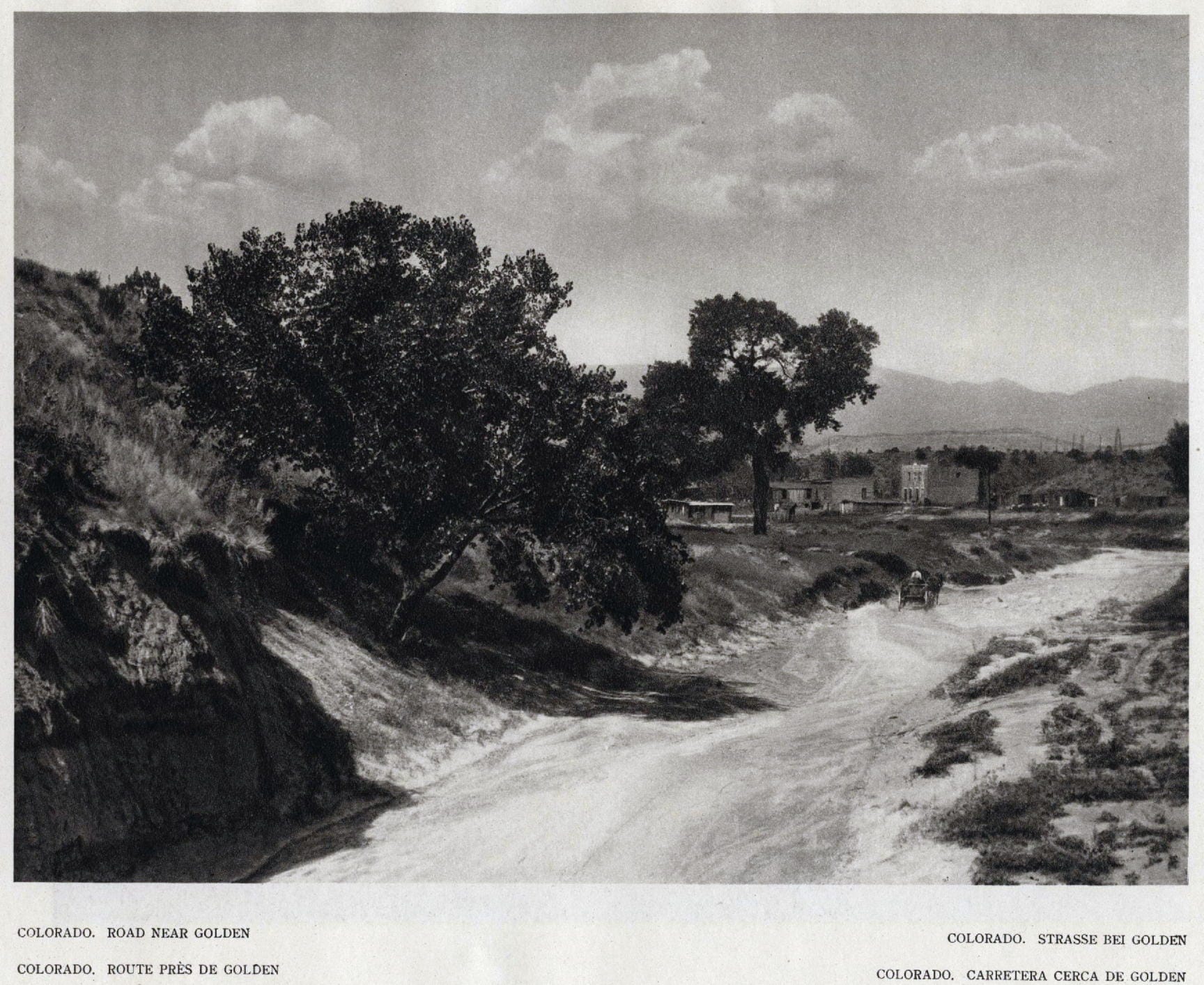
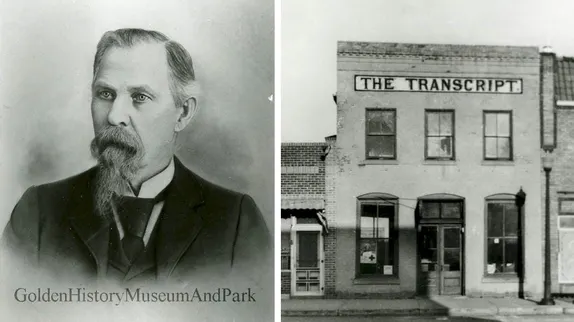
As automobiles came into use, better roads became more important. Business owners and boosters saw roads as increasingly important to the movement of people and goods, but there still was no real tax base dedicated to paying for roads. The April 16, 1908 Colorado Transcript featured an article titled “Boosters Plan Campaign to Improve Highways,” which said “…residents in the eastern part of the county are manifesting great interest in the improvement of the highways, many having offered to contribute $100 each in cash and 100 days of work with teams to grade the Middle road.” The same article said that John Brisben Walker, who was building a resort near Morrison, was offering to contribute 10% of the total cost of improving the South Golden and Morrison Roads.
Building roads by subscription was not a good solution, as people soon learned that road-building was an endlessly expensive proposition. With costs so high and funding sources so scarce, roads were built as cheaply as possible.
127 Years Ago
Some landowners took the matter into their own hands, as evidenced in this October 2, 1919 letter to the editor:
The other morning I was projecting around with a shovel and it came over me to fill up a hole in the street over which I had been jouncing for weeks . It gave me a very virtuous feeling although it was entirely for my own benefit, to get out in the street and actually do something which others might profit by. I am willing to share this opportunity with every auto owner in town. You will get this feeling by going out and filling the holes in the street on your own frontage.
Colorado Transcript - October 2, 1919
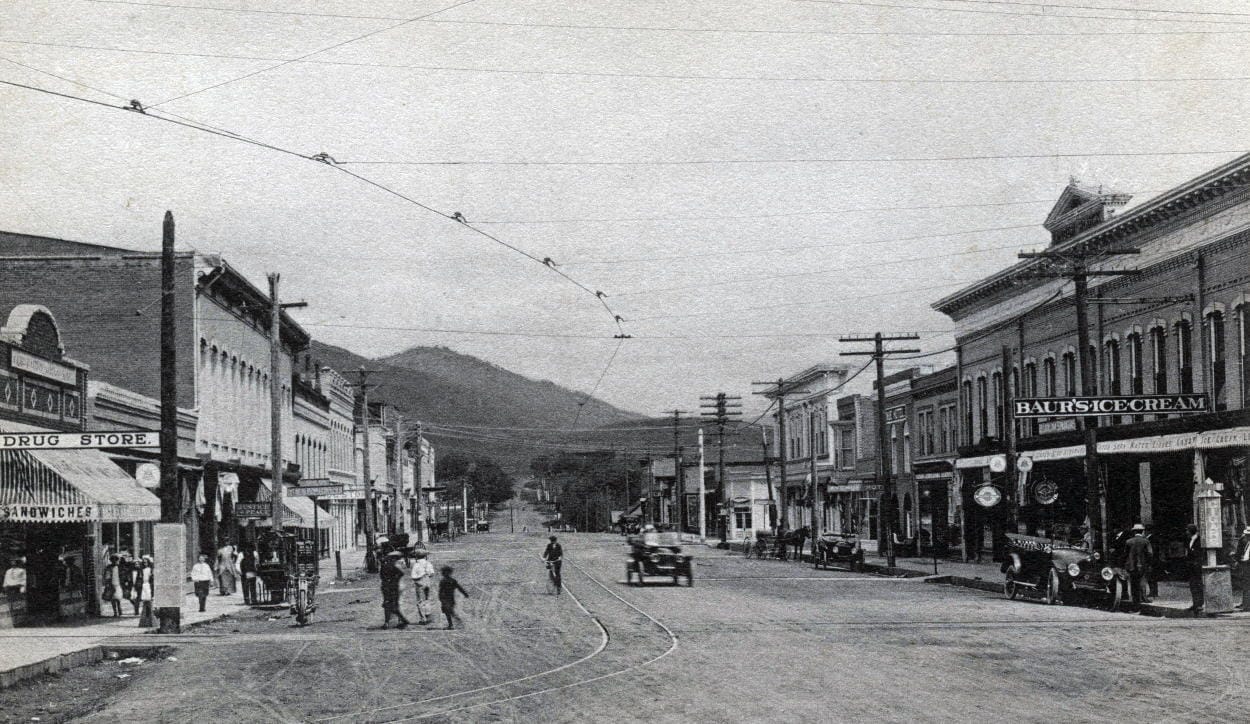
By the 1920s, the desire for roads far outstripped the available revenue. Colorado voters approved a bond issue in 1921, but that was quickly absorbed. A 1926 article reported that the highway department would be out of funding by the end of the year. The Highway Commission pushed for higher gasoline and license plate taxes, so that those using the roads most would pay more of the cost of building them.

96 Years Ago
Bridges were even more difficult and expensive to build than roads. The October 2, 1930 Colorado Transcript described an accident on the Ford Street bridge over Clear Creek. The driver of an automobile, apparently blinded by rain, drove his car onto the support at the edge of the bridge.
The coupe climbed a considerable distance on the bridge support and then toppled over onto the bridge. Had it fallen the other way, into the river, the occupants would probably have been killed.
A similar accident had occurred two weeks earlier. In that case, the driver was blinded by the headlights of an oncoming car and crashed into the bridge support. One of the occupants died. The other driver left the scene without checking on the accident victims.
These two incidents inspired an editorial in the Transcript:
GUARD THIS BRIDGE
Twice within the past two weeks the Ford street bridge has been the scene of serious motor car accidents--one of them resulting fatally.
The bridge, built in the days of slow, horse-drawn traffic, is a danger spot and will be until it is replaced by a modern bridge. Lack of finances make it virtually impossible to build a new bridge at this time.
But the present crossing can be protected by warning lights or other inexpensive safeguards. And it should be done now--today--before other lives are lost or other motorists injured.
Colorado Transcript - October 2, 1930
During the Depression, some federal funding became available for roadwork. WPA funds were intended to provide employment, and the workers were chosen based on need (men with dependents given top priority), so just as in pioneer times, the men building the roads were available, but not necessarily skilled.
The Federal government became increasingly involved in funding roads as time went by–particularly after World War II. One good thing that resulted from Federal involvement was higher standards. When the Feds provided funding, they required certain things, such as level grades, straight routes, gravel to a certain depth, etc. Over time, the nation’s roadways became both more drivable and more resilient.