
By Paul Haseman
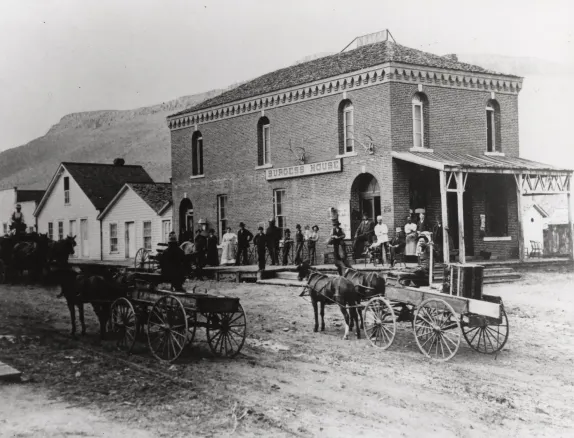
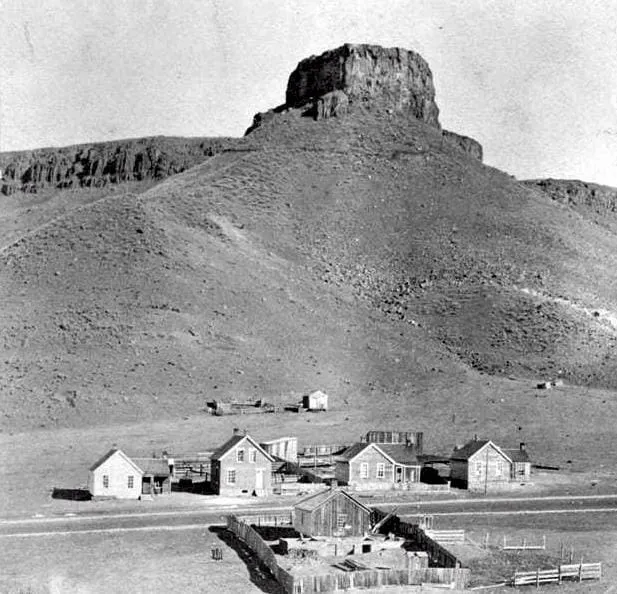
Golden is a semi-arid desert as this photo shows its natural state 150 years ago. Therefore, irrigation was essential for anything other than sagebrush and rattlesnakes. At least six major irrigation canals, locally called “ditches” were built in and around Golden to include the Agriculture (Ag) Ditch, Church Ditch, Farmers & Highline Ditch, Rocky Mtn Ditch, Wannemaker Ditch and the Welch Ditch.
This last one, the Welch Ditch, rises to the top in terms of interest and impact. Charles Welch was a Golden businessman, who among other endeavors, built a brick tannery in 1867, which cratered two years later and sat as an empty derelict for four years. Welch sold it to Adolph Coors, who founded his brewery is that abandoned tannery, but that’s a whole other saga. So, one of Charles Welch’s lesser-known achievements, but one which bears his name, was constructing an irrigation ditch to bring water from Clear Creek a mile west of Golden to his property on the south side of Golden. This property, the Welch Addition, was annexed to Golden in 1871 and stretched from 19th Street to the Golden Cemetery. Ever the businessman, Welch’s made a “generous” offer to donate 12 acres of his land to Missionary Bishop George Randall in 1868 for a boys’ school. Bishop Randal had already opened a girls’ school (Wolfe Hall) in Denver and Welch’s free land offer tipped the scales to Golden for the boys’ school. Welch took the good news to the Golden City Council and requested a free right-of-way across the City to not only the new school but, of course, across Welch’s now irrigatable and more valuable property. The Council gladly granted the request.
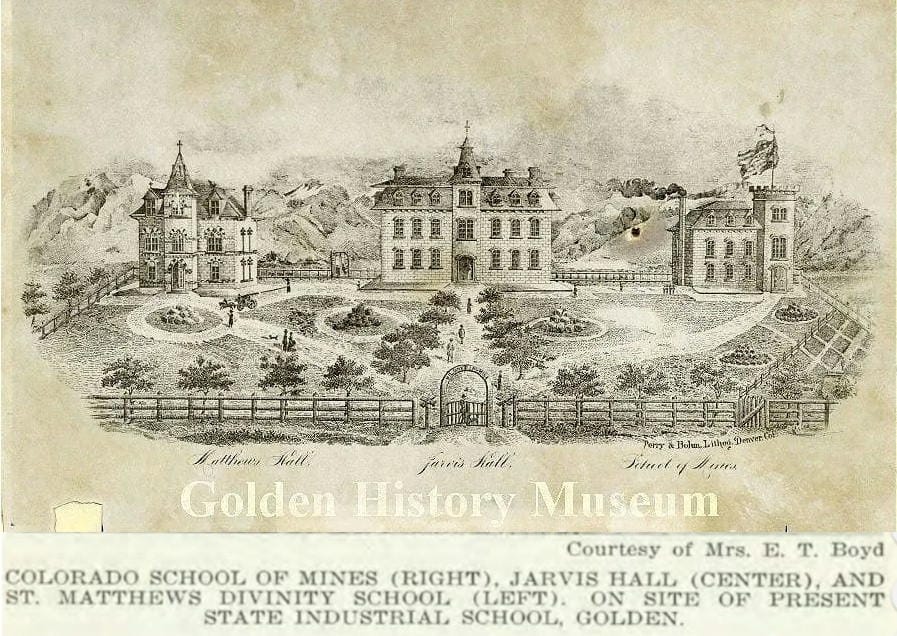
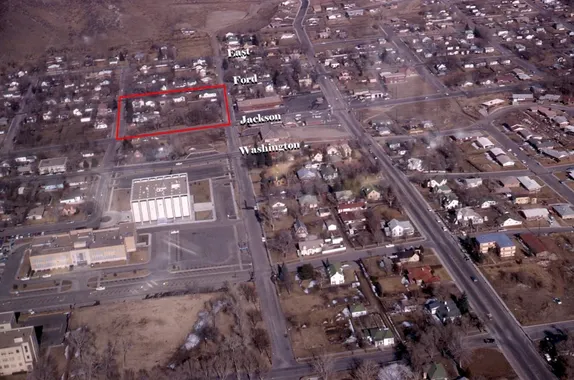
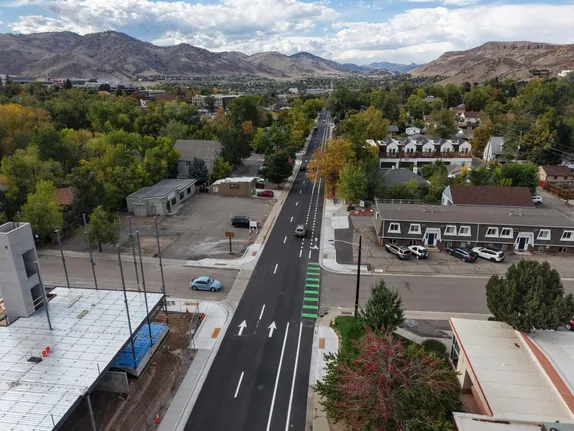
Surveyed by Edward Berthoud and built in 1871, the Ditch began with a small dam and “head gate” beyond Tunnel One in Clear Creek Canyon and traversed the side of Mt. Zion with wooden flumes. Those flumes were replaced with concrete flumes built in 1920 by “Cement Bill” Williams. The Ditch is still discernable on the south side of the Hanglidger landing area off 6th Ave. Likewise, the noticeable large bump/dip on 6th Ave near that location is a ditch remanent. The Ditch then entered Golden at the west edge of the now Mines Campus and proceeded a mile further south to the end of Jackson Street to the then three structures of the original School of Mines; first, a boys’ boarding school (Jarvis Hall - 1870), then a seminary (St. Matthews Divinity School - 1872) and, wait for it, an Industrial Mining School (1873). Yes, the original School of Mines was built a mile south of downtown on land which is the now the Lookout Mountain Youth Services Center.
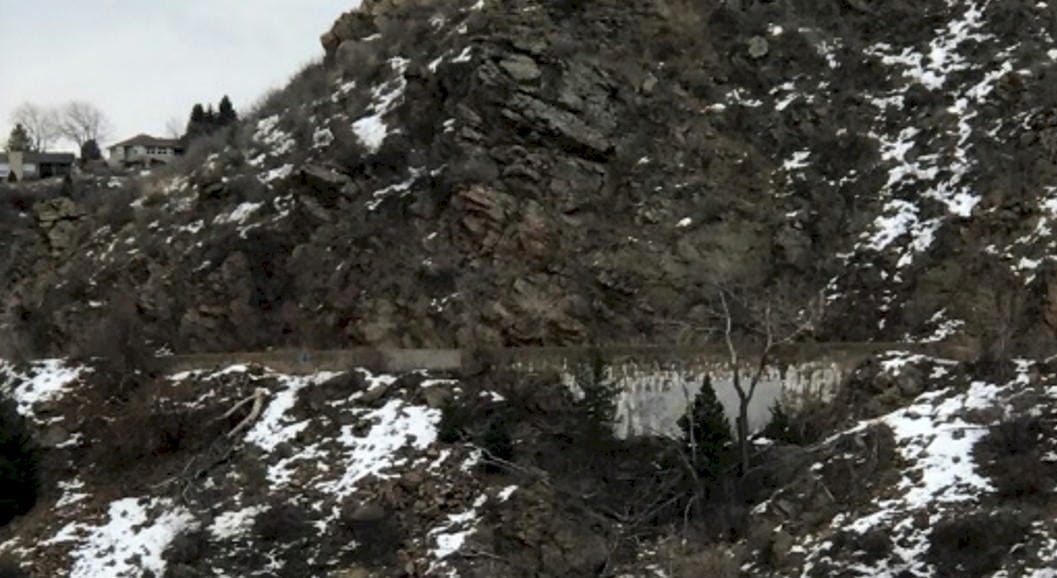
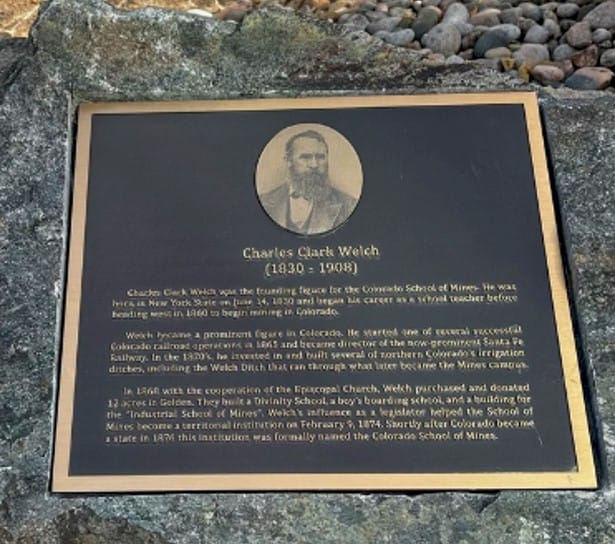
Water first entered the ditch on 2 July 1871. The Ditch irrigated the former City Park at 18th Street and, of course, Welch’s southern blocks of land and the Industrial School’s campus, to include its associated farm operations. Ditch construction in Clear Creek Canyon initially used wooden flumes, some of which were later replaced by concrete flumes, still visible today. In effect, Welch’s desire to irrigate his land was the impetus for the location and construction of the Colorado School of Mines in Golden. In recognition of Welch’s contribution to the School of Mines, the school placed a plaque in his honor in 2020 on the route of the Welch Ditch through the campus.
Ah, but the Ditch saga continues with the extension of the Ditch into Lakewood in 1885. Again, another story for later telling and of the over 130 years the Welch Ditch providing water to the City of Golden and Lakewood.
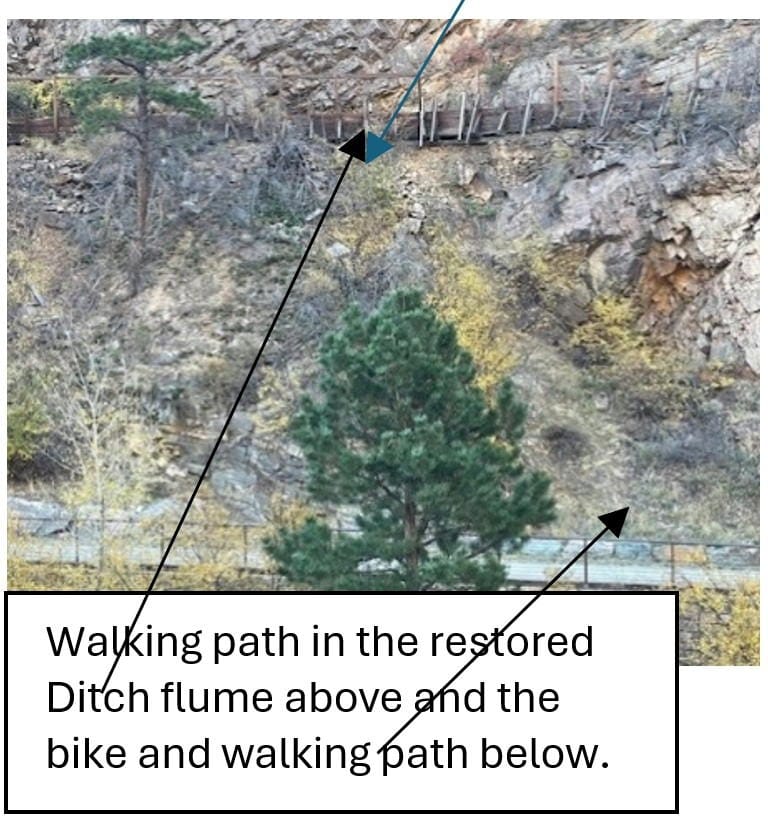
To better preserve the Ditch’s legacy, Jeffco Open Space restored a portion of the Ditch as a 1.5-mile walking trail in Clear Creek Canyon on both sides of 6th Ave Tunnel #1. This new use of the Ditch is a portion of Colorado’s Clear Creek/Peaks to Plains Trail.
Preserving the Welch Ditch helps ensure that future generations will know more about the Welch Ditch and its creator, Charles Clark Welch.