
125 Years Ago
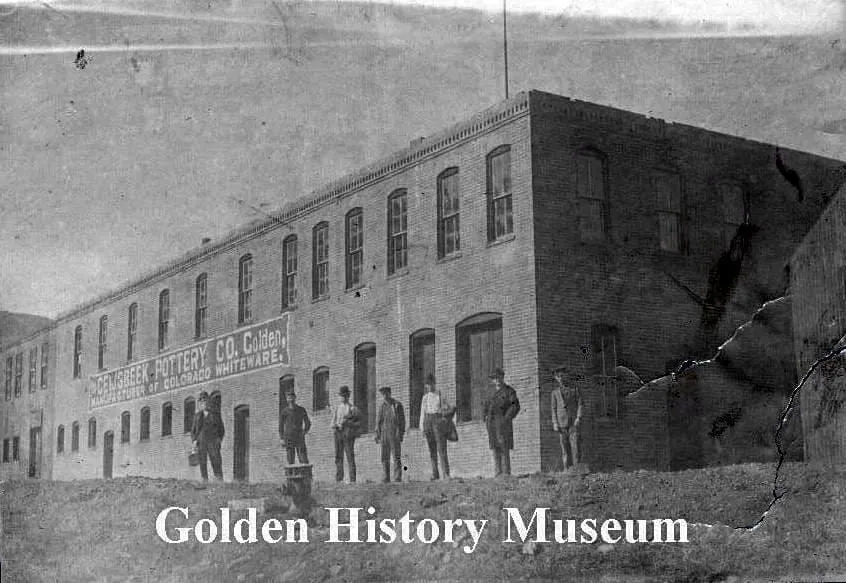
The May 22, 1901 Colorado Transcript celebrated the arrival of Geijsbeek Pottery. This firm was led by a pair of brothers–Samuel and J. B. Geijsbeek–and financed largely by Golden people. It used local clay and was seen as the harbinger of a major ceramics industry for Golden.
It is with no little pride and gratification that we today present a picture of the buildings recently completed in this city for the manufacture of white table-ware, toilet sets and the like, the first and only one ever started west of the Mississippi river, and it is with equal gratification that we are enabled to state that all the materials entering into the manufacture of this product are found in inexhaustible quantities within two miles of the plant, excepting some of the chemicals which are manipulated in the laboratory connected with the factory.
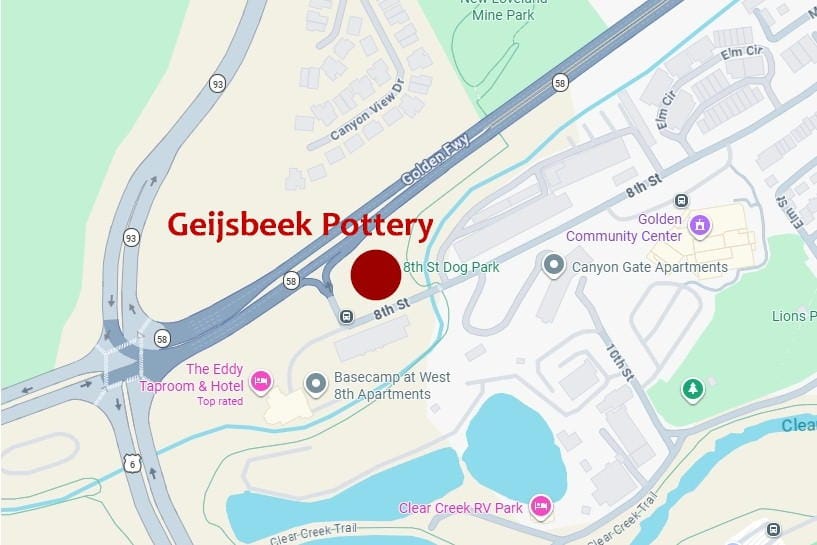
The Pottery was located along the railroad tracks (on 8th Street), on the site of the new Baseline Apartments. The railroad delivered coal and shipped the finished goods. The Golden Water Works provided water and Golden Illuminating Company provided power. The kilns went online in August of 1901 and a month later they were building an addition for another kiln.
The business failed quickly, By October of 1902, the company’s assets were being sold to satisfy creditors. There were a few attempts over the years to revive the industry, but none succeeded.
In 1918, local builder Oscar Nolin purchased the building to demolish it and sell the usable construction materials. The August 22, 1918 Transcript reported that he had sold a hundred thousand bricks to be used in construction of a Denver hospital. In October, the City purchased “a number of heavy timbers taken from the old Geisbeek pottery, for use in building bridges.”
Despite this failure, pottery did become a vital industry in Golden, beginning with Herold China and Pottery in 1910 and continuing today as CoorsTek.